SC6-BOARD-02-VIVEKALAYERS AND COMPOSITE BELOW
What is said over this shot
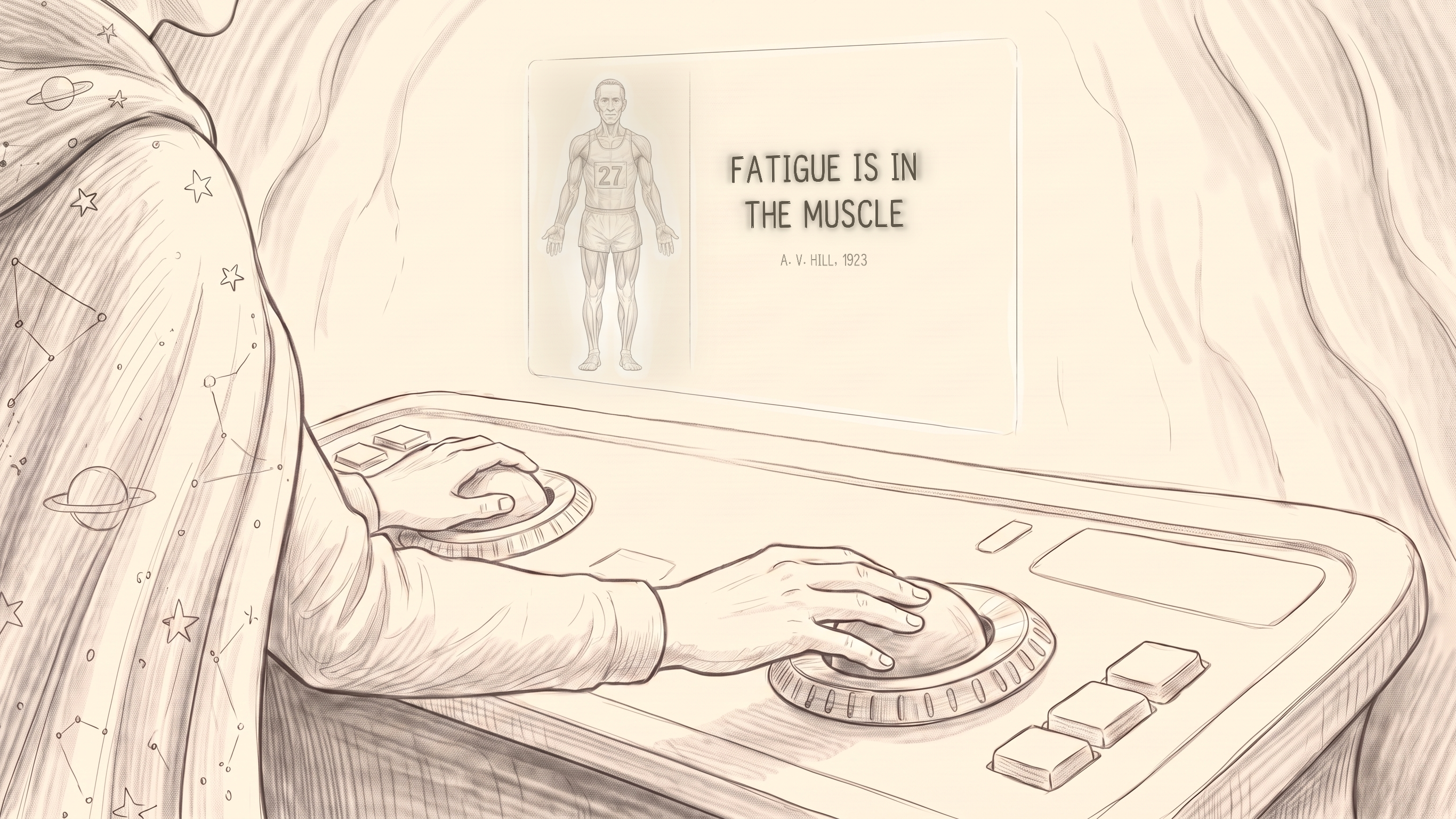
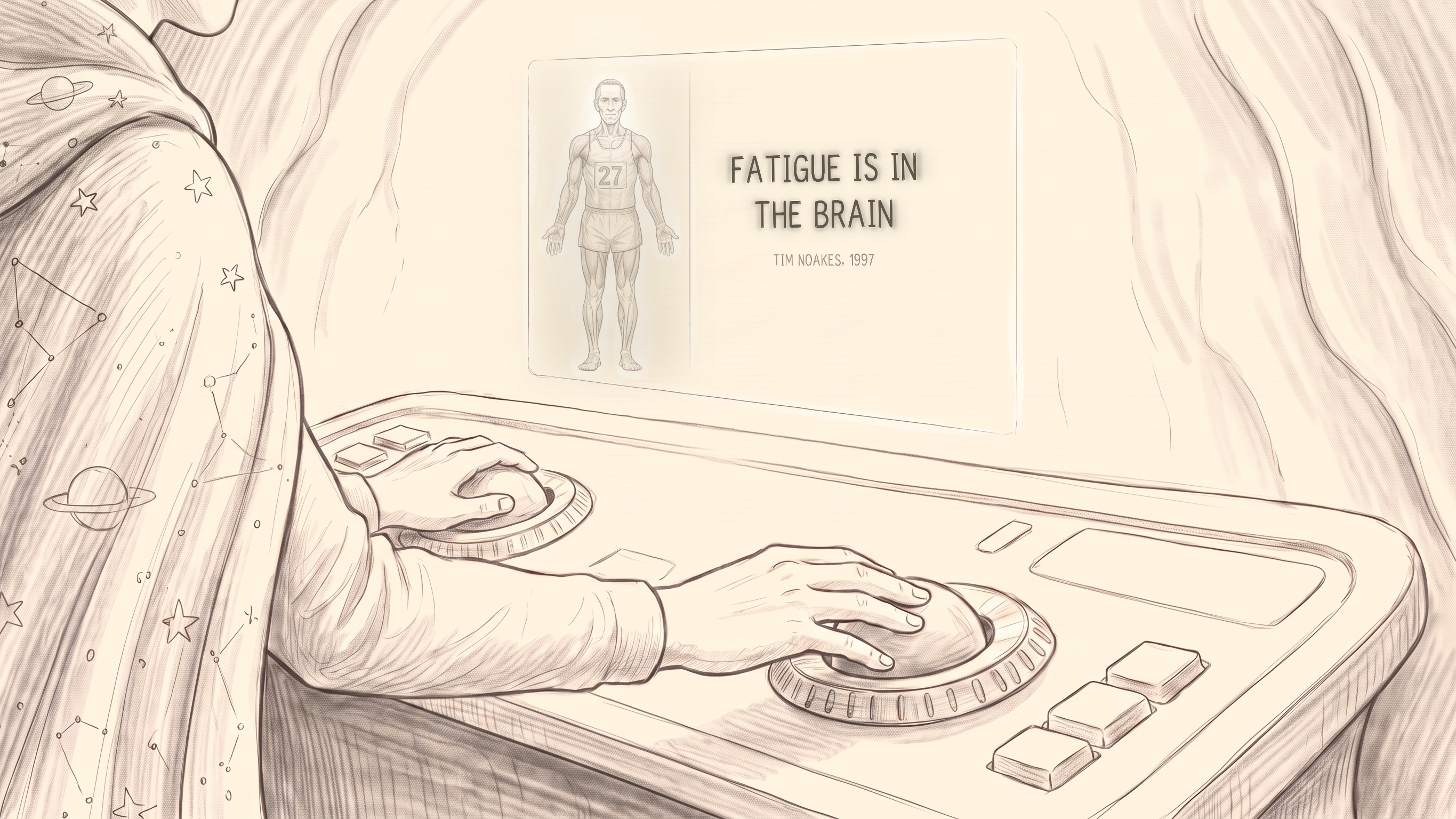
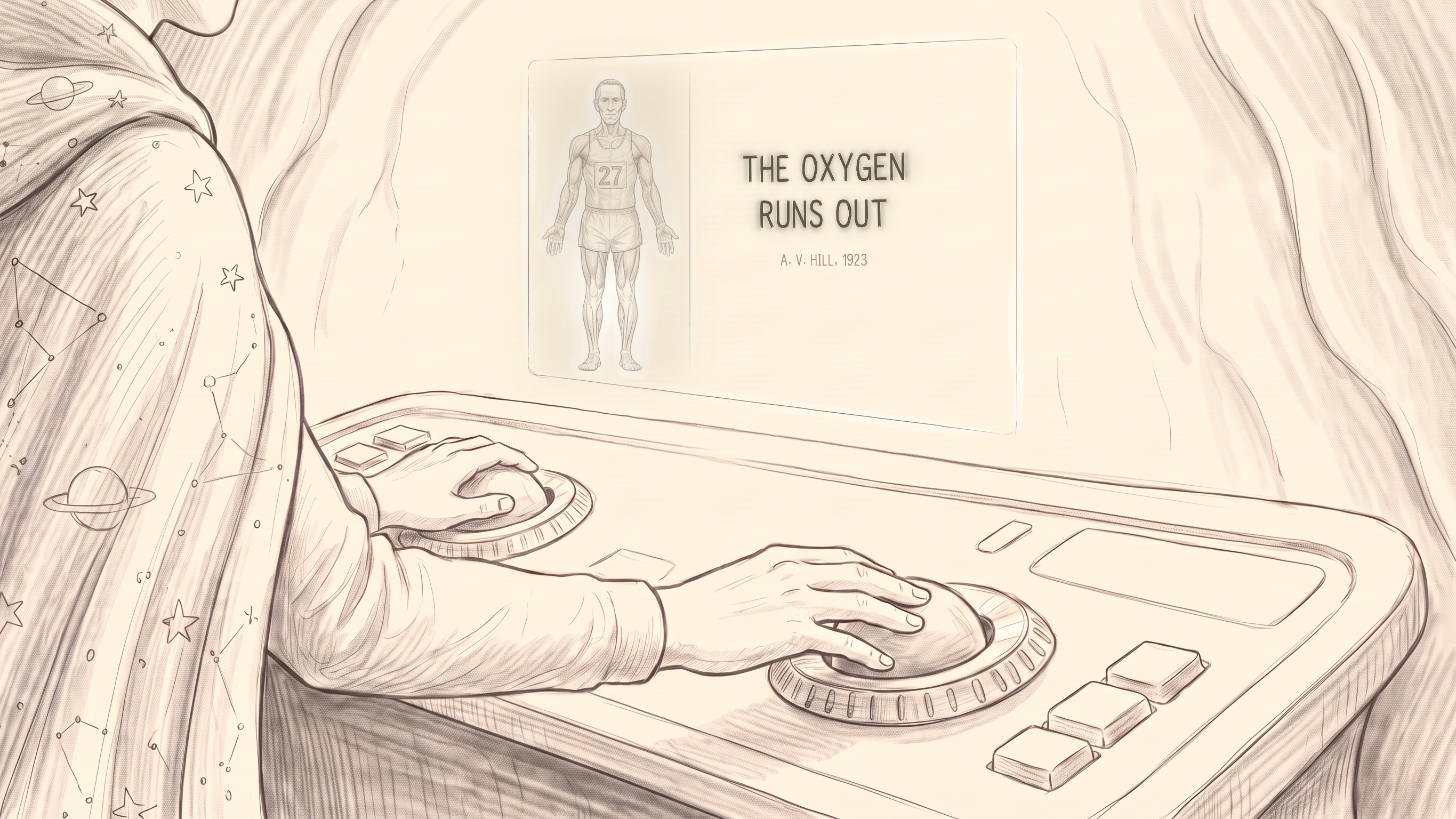
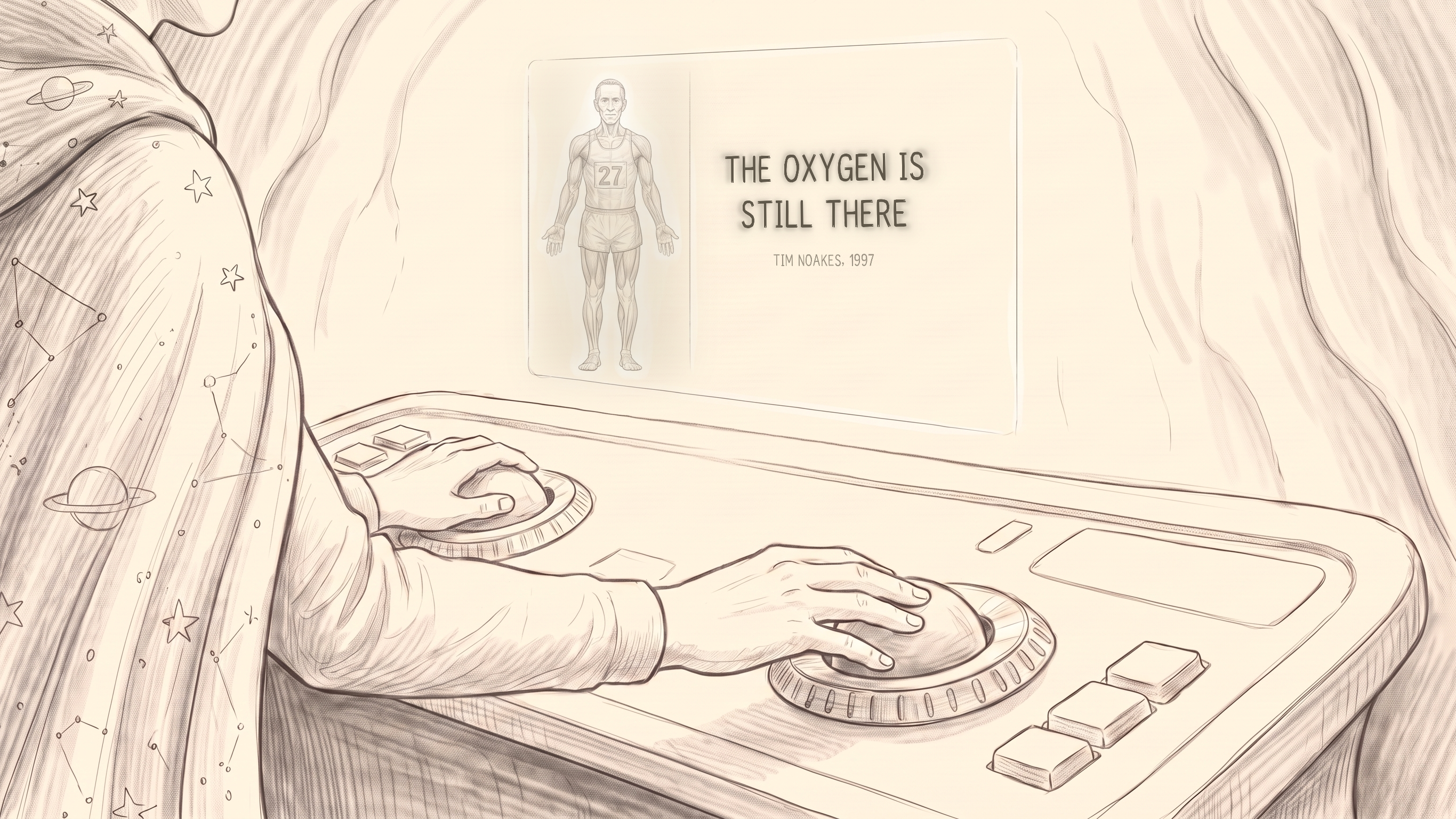
MANANIn 1923 a physiologist called A. V. Hill put runners on a treadmill and measured everything they did. He decided fatigue happens in the muscle.VIVEKAIt does not. In 1997 Tim Noakes said it happens in the brain.MANANHill said the muscle runs out of oxygen. That is why you stop.VIVEKAThen measure yourself the moment you stop. The oxygen is still there. So is the fuel.MANANSo the muscle fails.VIVEKAThe muscle is TOLD to stop. It is still able. It is being held back.MANANBut Hill said the body breaks down. A catastrophe.VIVEKANothing breaks. You are being protected, and you feel that protection as tiredness.MANANAnd Hill himself? Did he never think of this?VIVEKAHe did. One year later, in 1924, he wrote that something central must be governing the heart, protecting it.VIVEKABut he had only reasoning, no evidence. So it was dismissed, and for seventy years everybody studied the muscle.VIVEKAThen Noakes, St Clair Gibson and Lambert published it properly, five linked papers, in 2004.VIVEKAThe brain reads your pulse, your breath, your temperature, your water, your sugar. The whole time. And it decides when you stop.
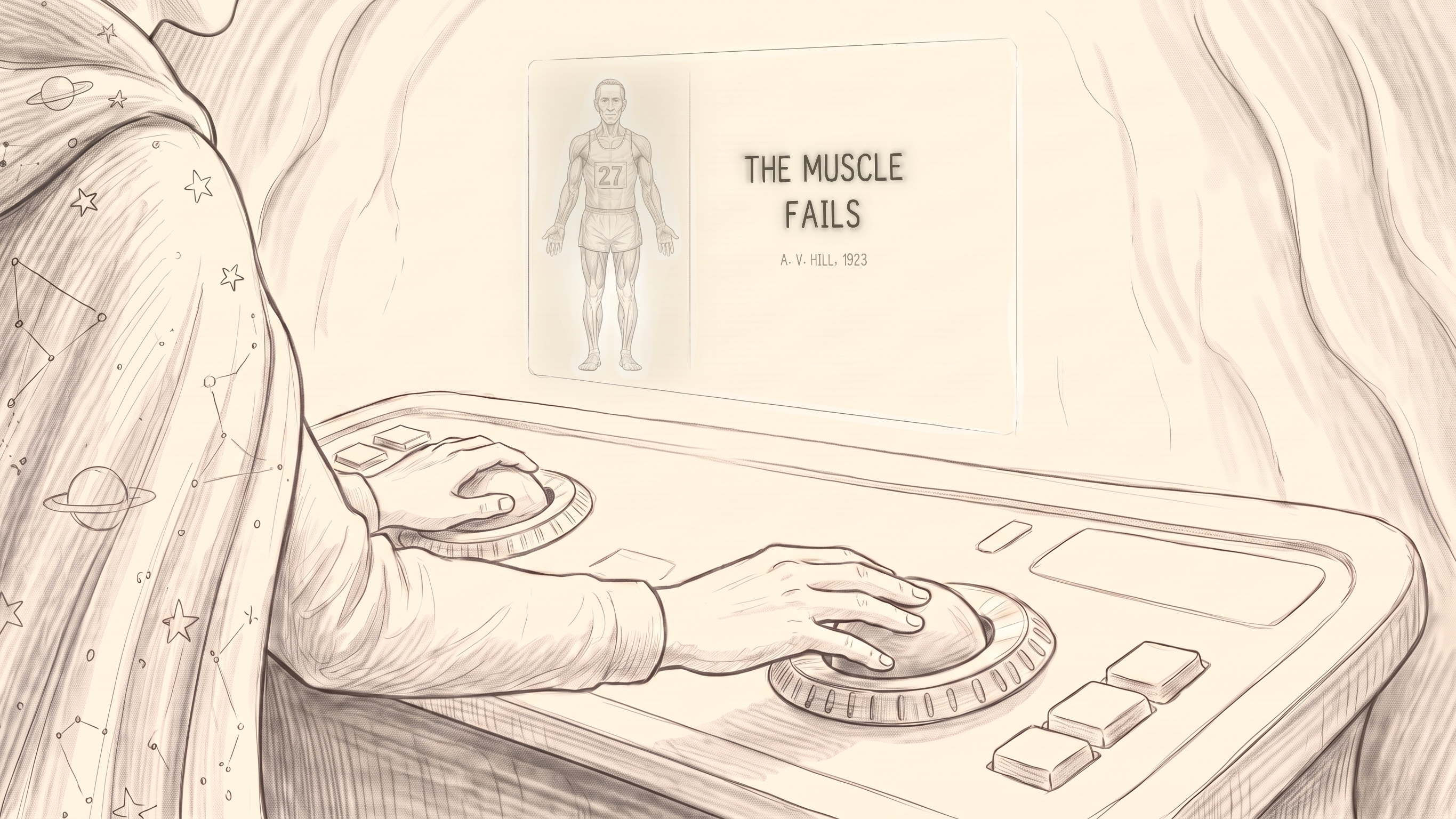
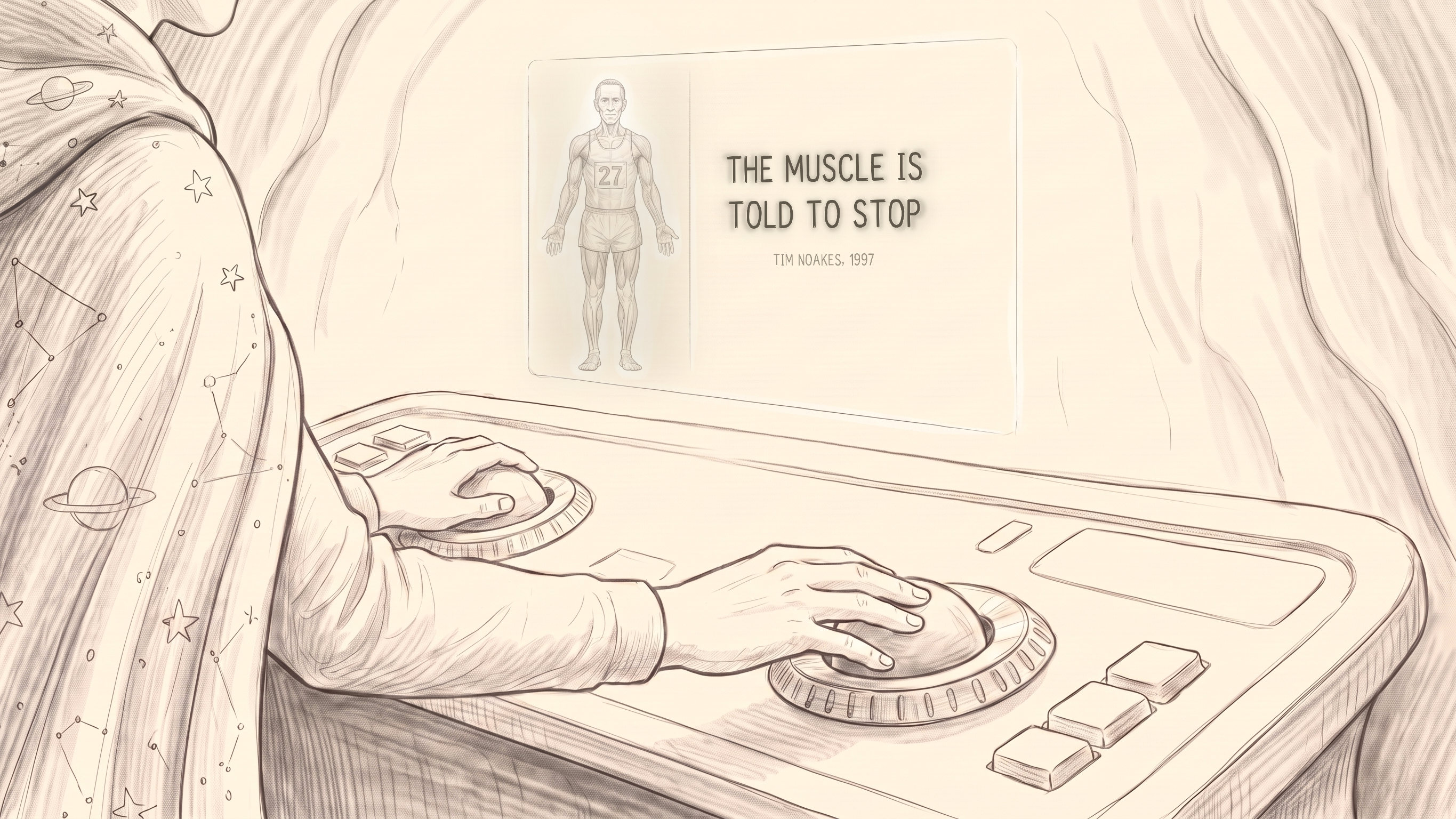
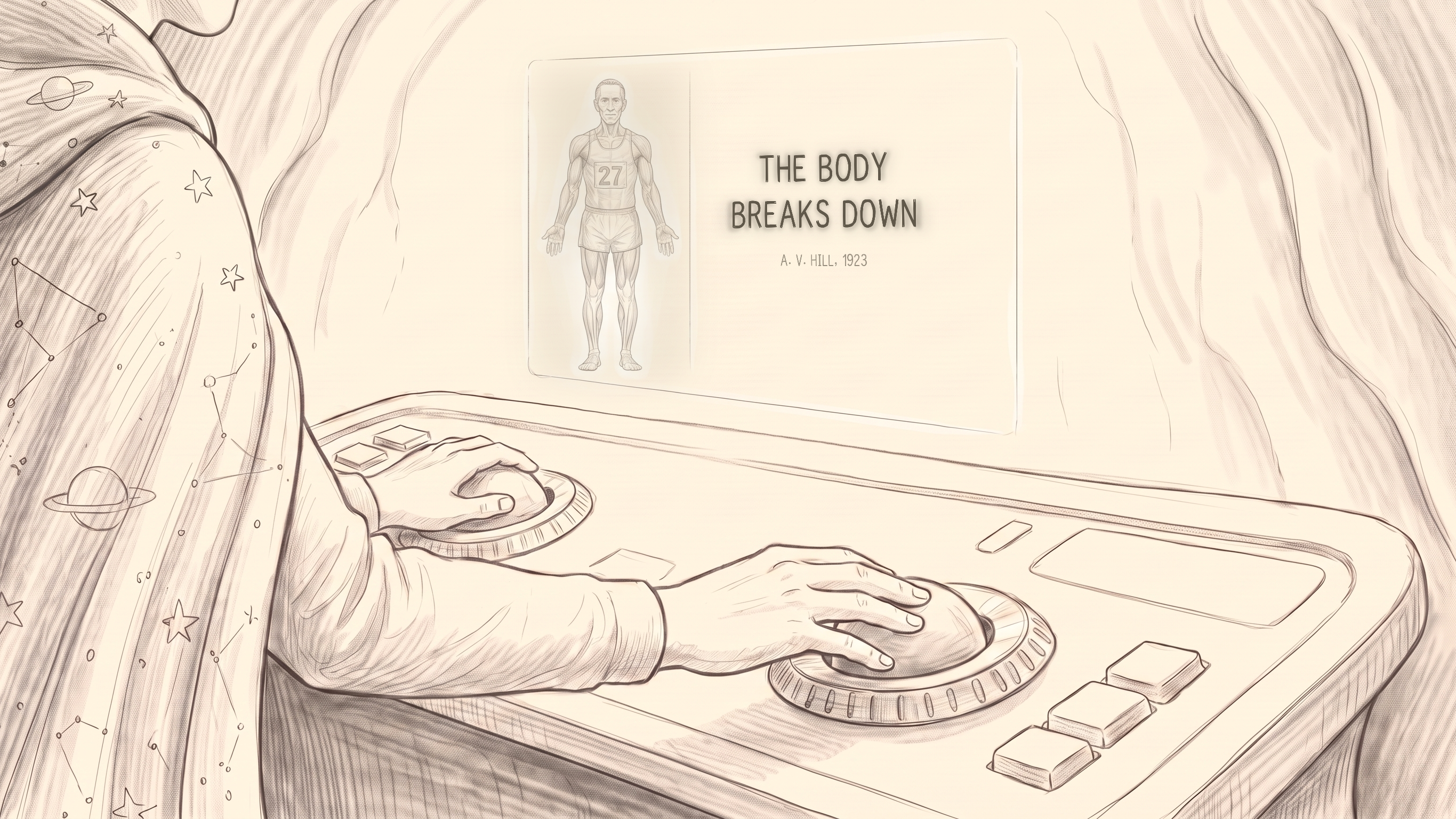
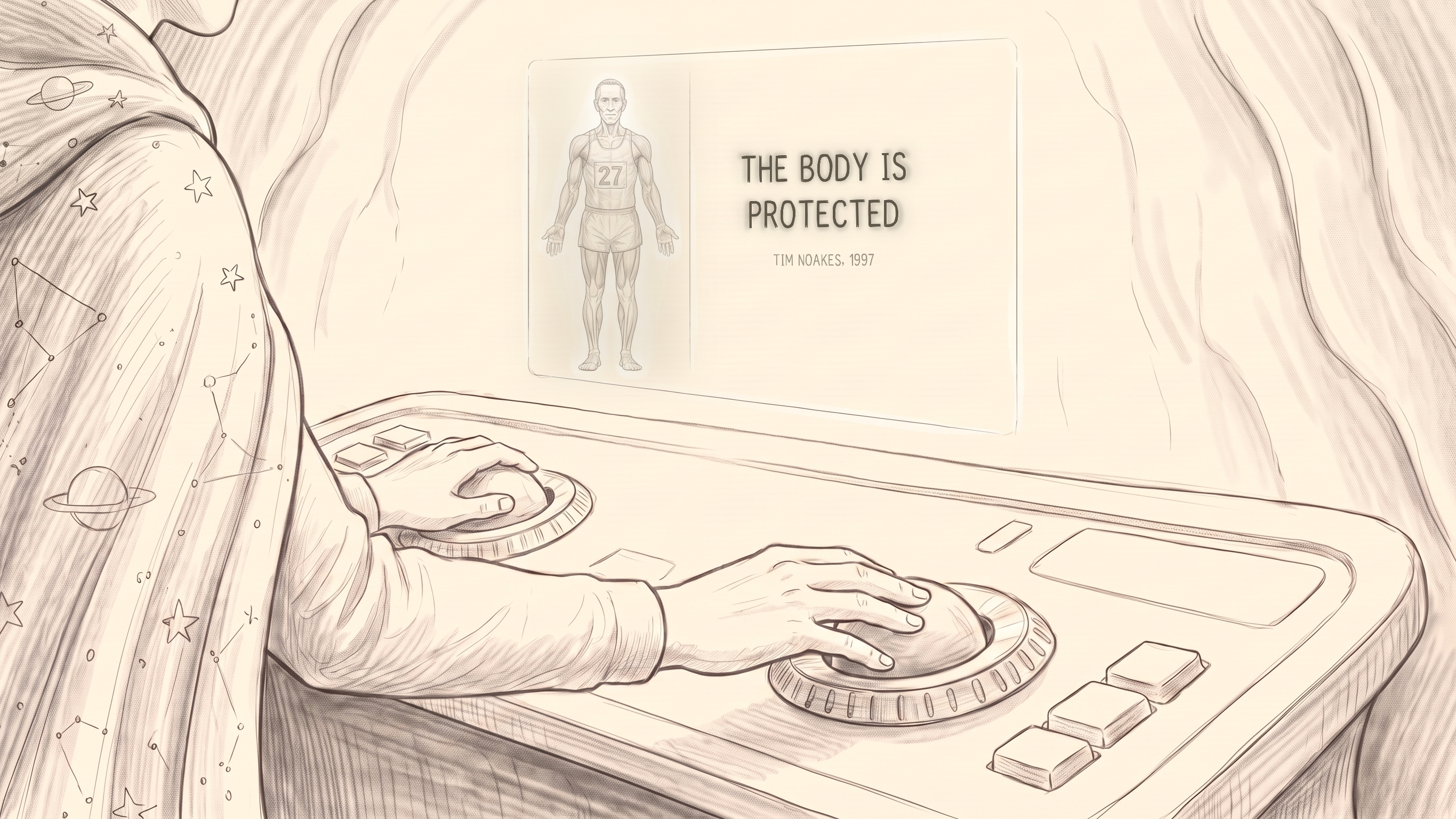
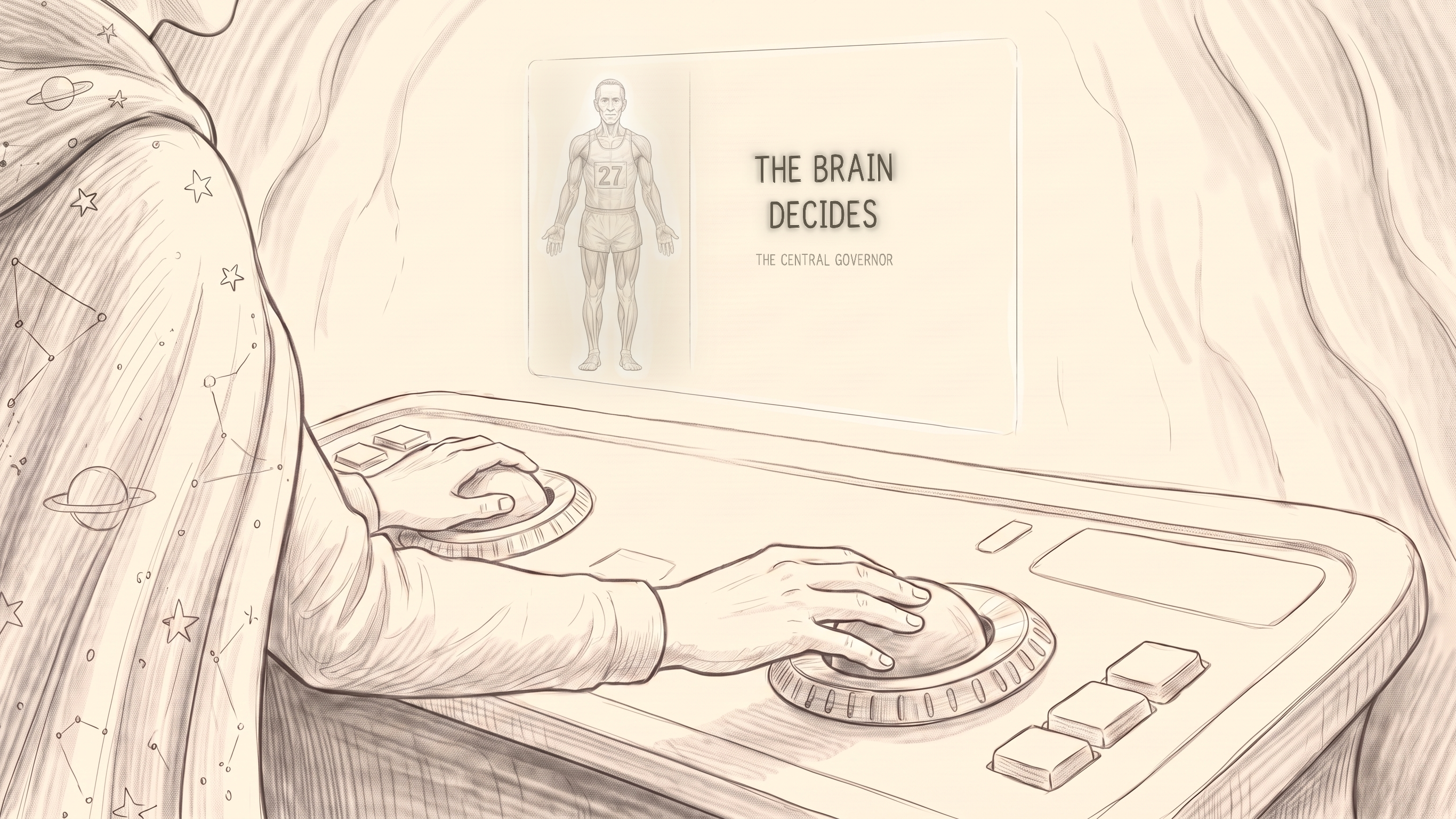
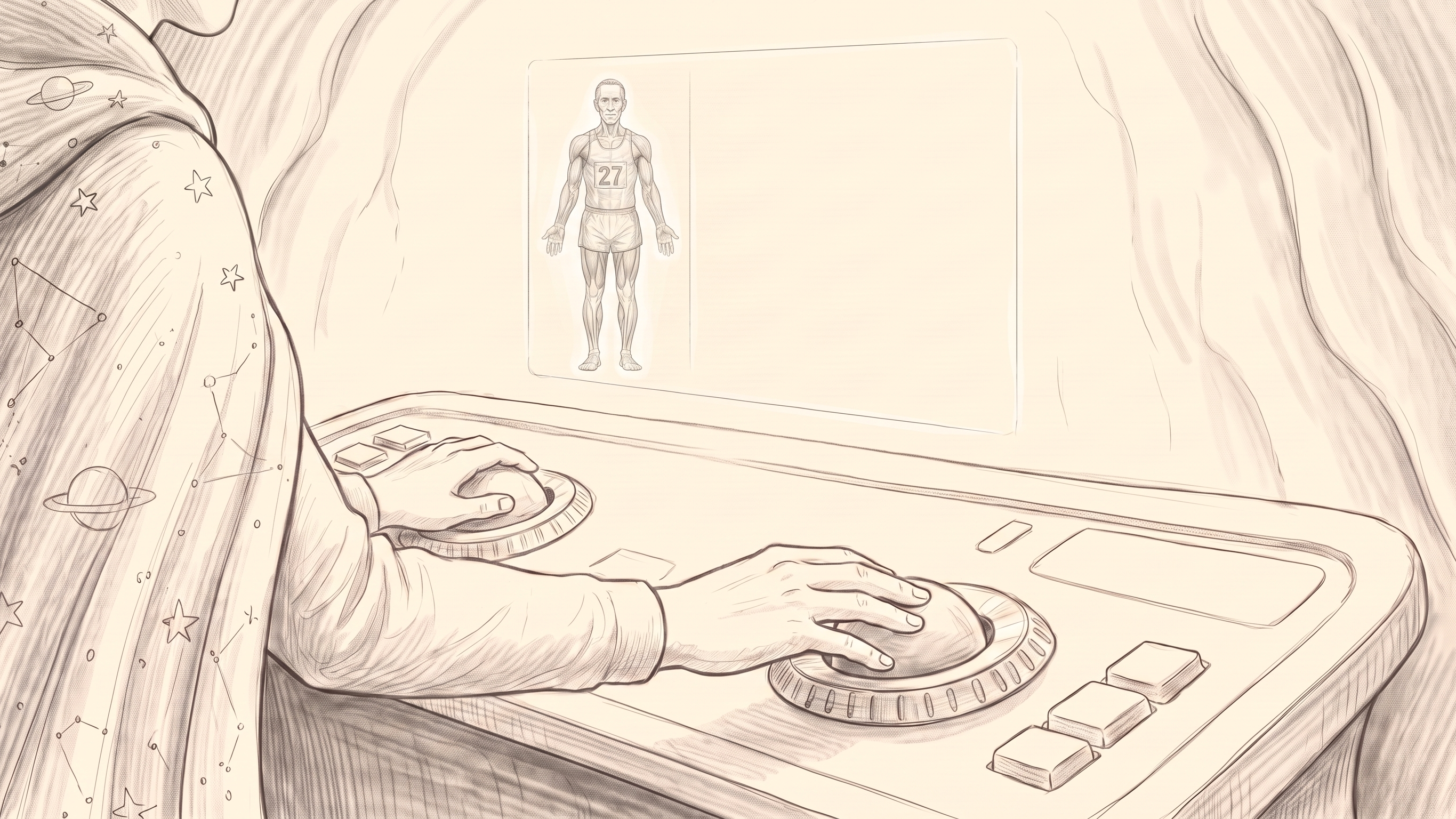
ONE DISPLAY, THIRTEEN STATES. Manan puts a claim on it, Viveka overwrites it, back and forth, until the right theory is standing there alone. All thirteen are identical except the words and the light, so THE ANIMATION IS A CROP between frames.
EVERY CLAIM CARRIES ITS NAME AND ITS YEAR, in small type under the line, the way a lecture slide does. A jury of scientists reads a claim without attribution as an opinion. THE BOARD IS FORMAL AND THE BOY IS NOT: he gives the name and the year, then says what it means in his own words.
THE TURN IS AT STATE NINE AND IT IS THE BEST THING IN THE SCENE. Hill proposed the muscle model in 1923 and then, in 1924, proposed a central governor protecting the heart. He had reasoning and no evidence, so it was dismissed, and the field spent seventy years on the muscle. Noakes revived it in 1997; Noakes, St Clair Gibson and Lambert published it as a full theory in five linked papers in 2004. IT IS NOT A BOY CORRECTING A DEAD SCIENTIST. It is a boy discovering the man was right and had been forgotten.
THE HIGHLIGHT MOVES, THE FIGURE DOES NOT: the LEG when Manan speaks, the HEAD when Viveka answers, and the head from state nine onward because from there they are agreeing.
Both hands stay on the trackballs and the key is never shown in this stretch.
THE WORDS ARE PINNED TO THE SCREEN AND CENTRED IN THEIR OWN REGION. The panel is two spaces: the figure on the left, and a roughly square writing area on the right. The line and its attribution are ONE BLOCK, measured together and centred in that area horizontally and vertically, clear of the divider, then mapped onto the panel plane so they tilt with the glass.
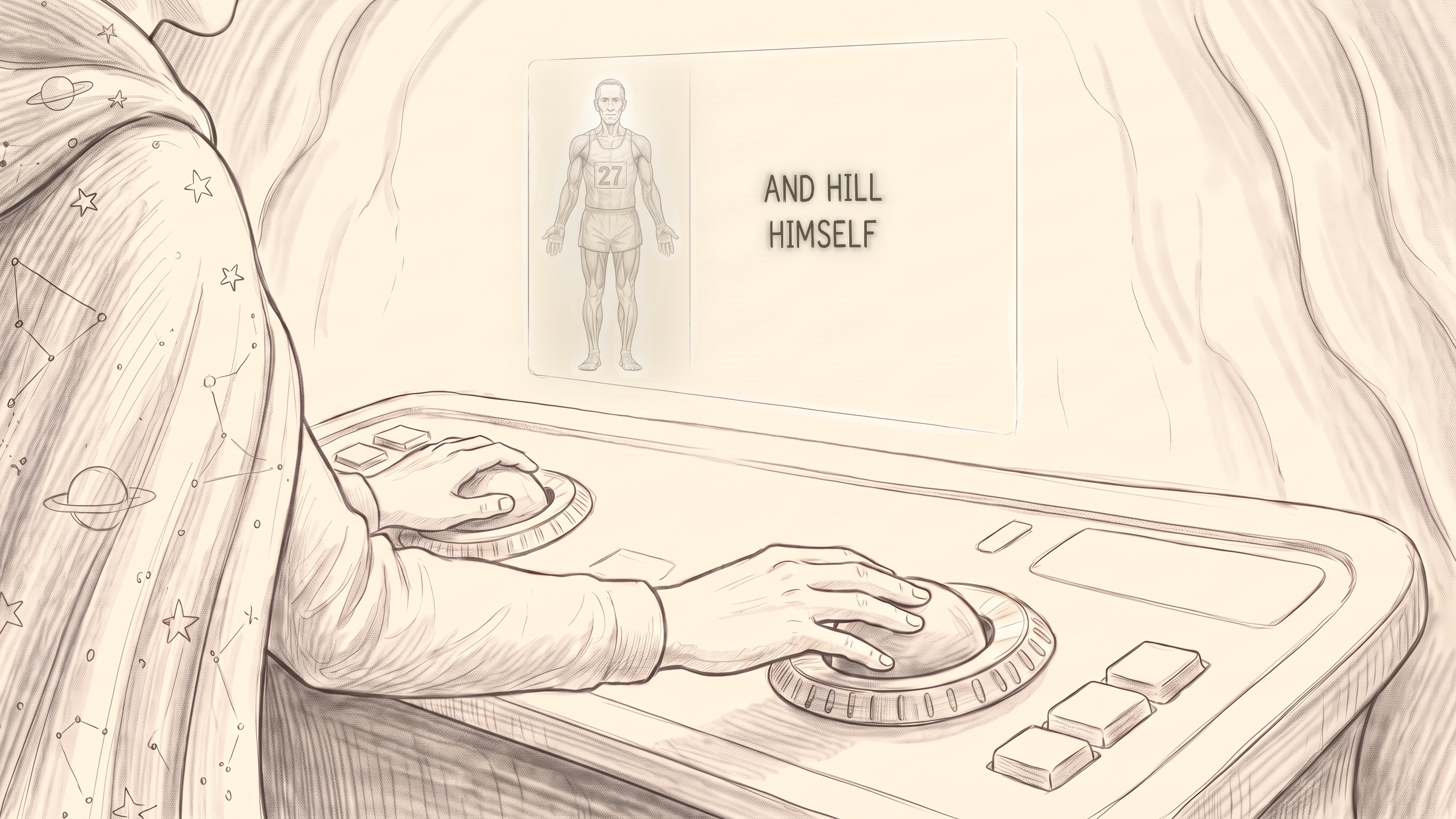
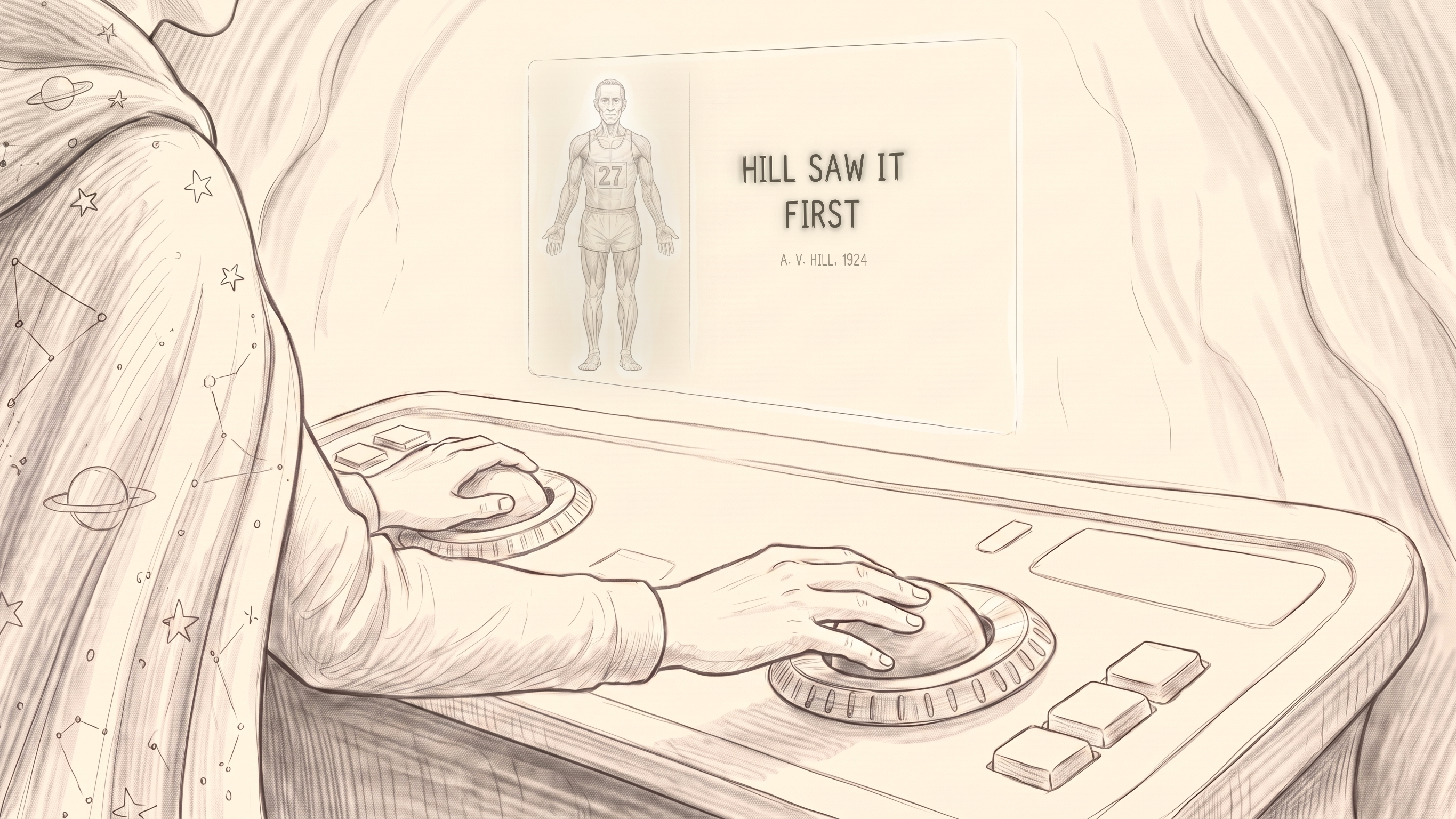
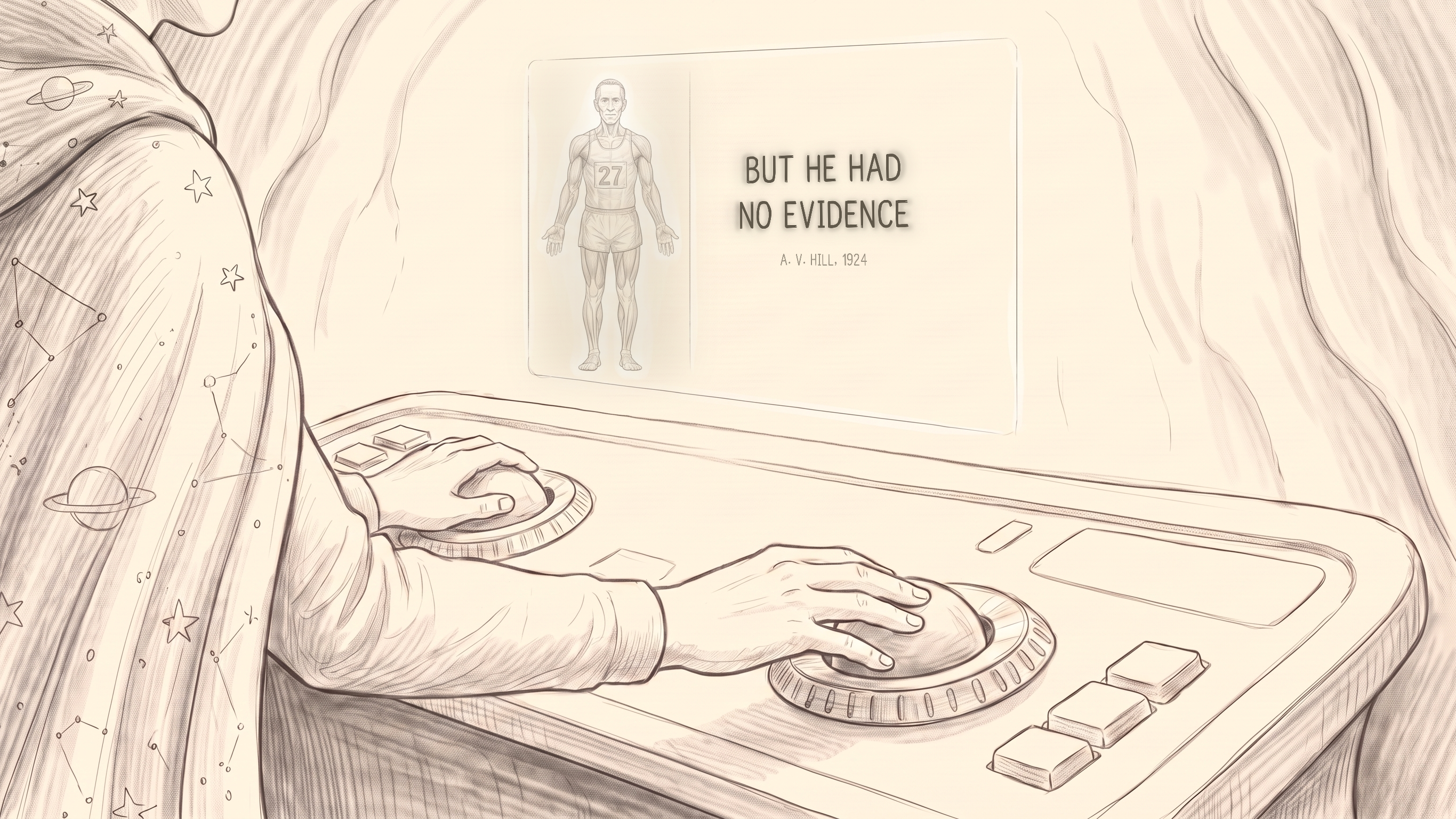
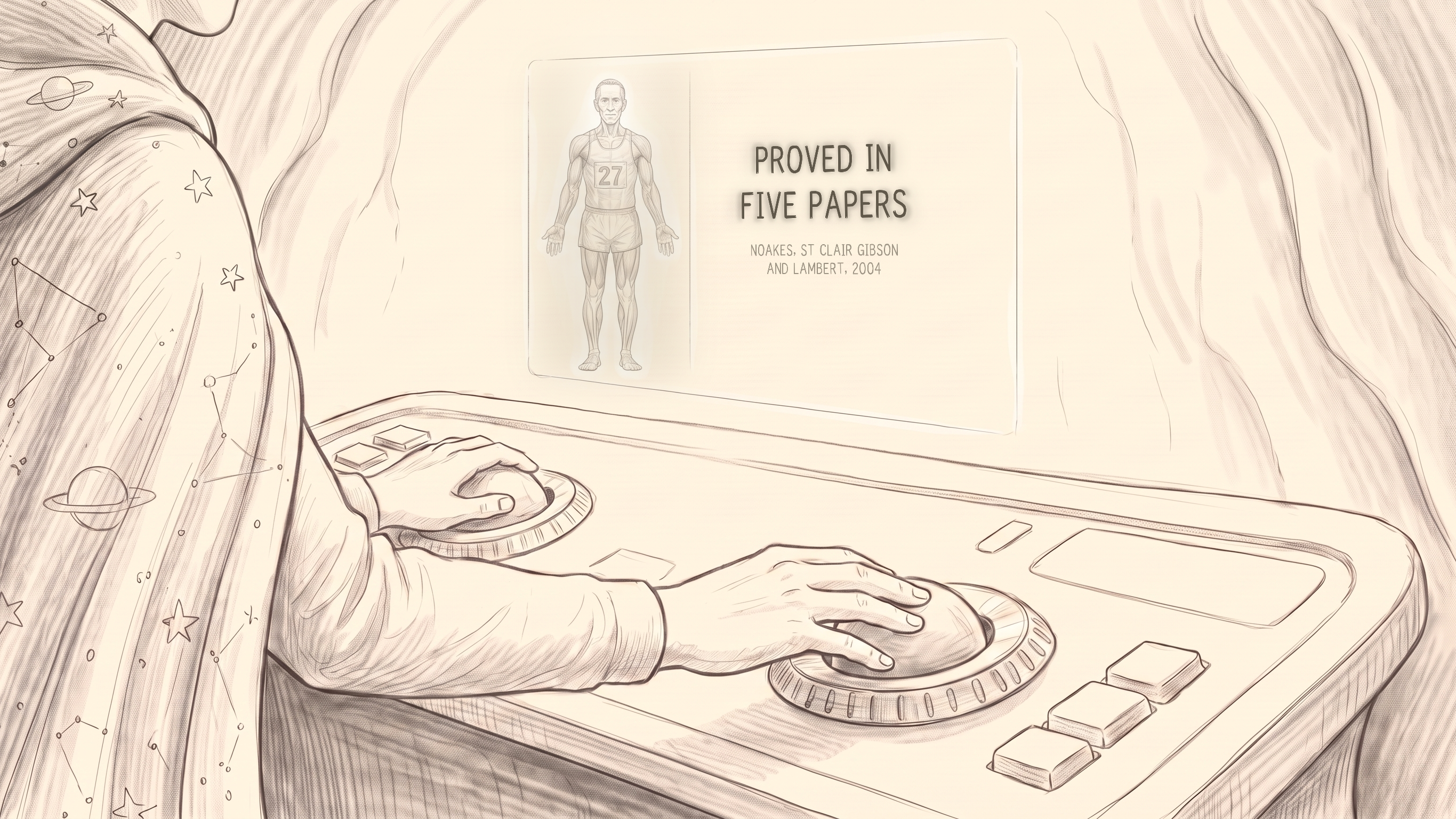
THE FIGURE ON THE DISPLAY IS THE RUNNER HIMSELF, not a generic body: his face, his build, the sleeveless vest with the number 27, his shorts. THE SKIN AND THE KIT ARE HALF TRANSPARENT AND THE MUSCLE RUNS UNDERNEATH, and the 27 stays readable on top of it. An X-ray that shows MUSCLE: no skeleton, no ribcage, no organs.
That matters for the argument. They are not discussing a body, they are discussing THAT body, the one we watched collapse in the first scene, and the audience can see it is the same man.
All fourteen frames in playing order, the empty plate, and the lines in three text files: DIALOGUE_FOR_TTS.txt with all thirteen in order, and MANAN_LINES.md and VIVEKA_LINES.md with one actor each. They carry the spoken words and nothing else, no state numbers and no timings, because a text to speech engine reads whatever is in the file.
The board, state by state
Seven states and the empty plate, all identical except the words and the light. Crop between them and the board writes itself. The light is on the LEG when Manan speaks and on the HEAD when Viveka answers.
DOWNLOAD 01 LEG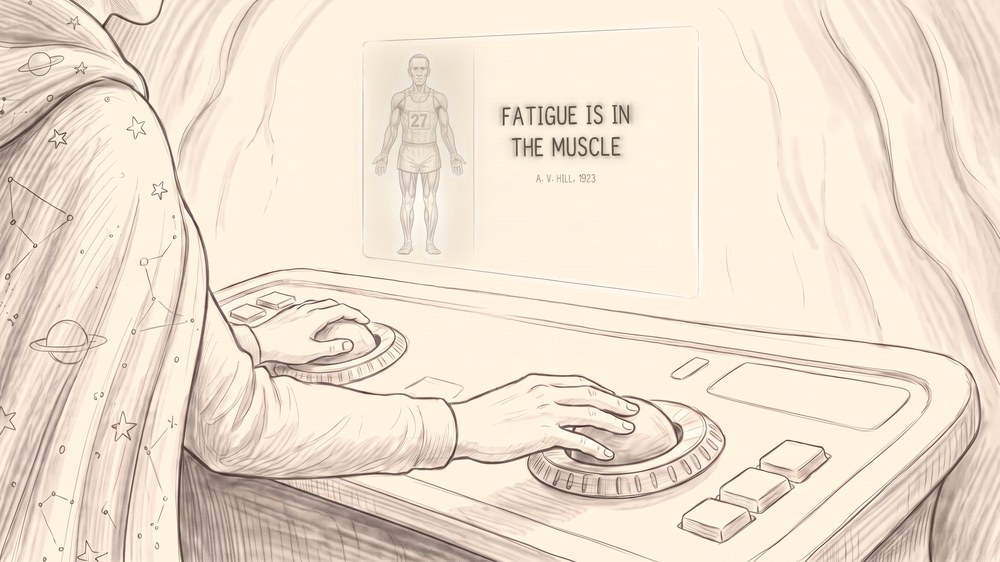
MANAN · FATIGUE IS IN THE MUSCLEA. V. HILL, 1923In 1923 a physiologist called A. V. Hill put runners on a treadmill and measured everything they did. He decided fatigue happens in the muscle.
DOWNLOAD 02 HEAD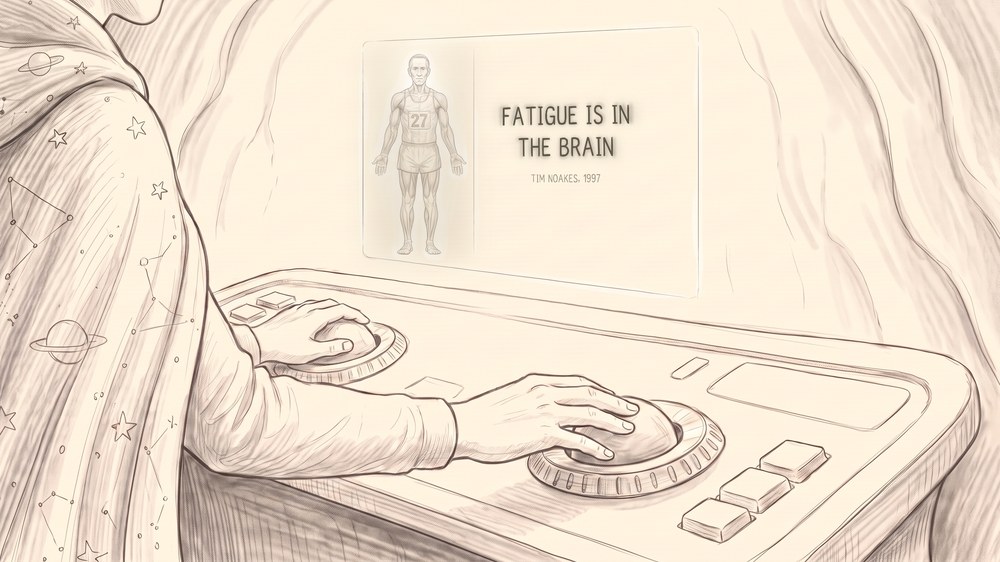
VIVEKA · FATIGUE IS IN THE BRAINTIM NOAKES, 1997It does not. In 1997 Tim Noakes said it happens in the brain.
DOWNLOAD 03 LEG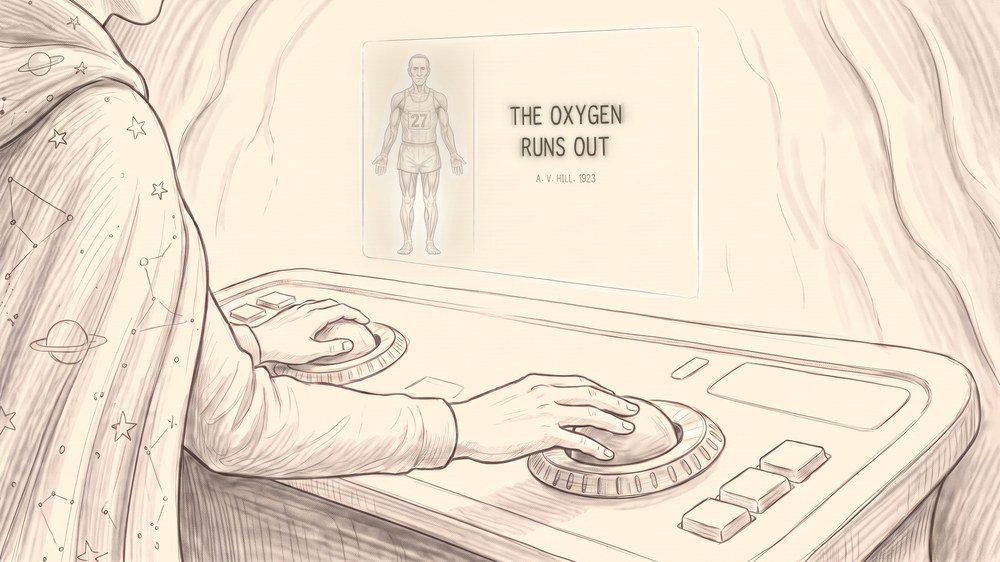
MANAN · THE OXYGEN RUNS OUTA. V. HILL, 1923Hill said the muscle runs out of oxygen. That is why you stop.
DOWNLOAD 04 HEAD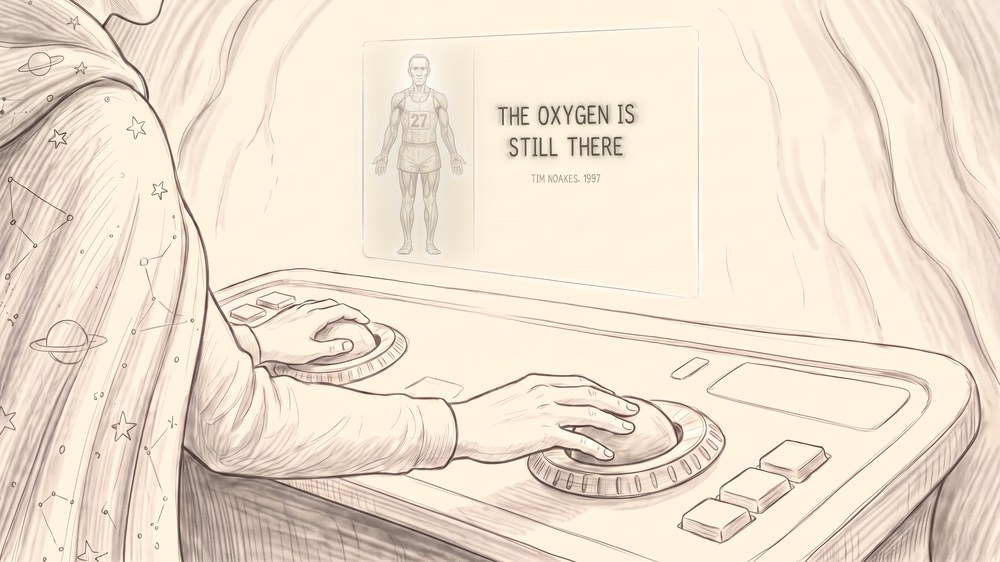
VIVEKA · THE OXYGEN IS STILL THERETIM NOAKES, 1997Then measure yourself the moment you stop. The oxygen is still there. So is the fuel.
DOWNLOAD 05 LEG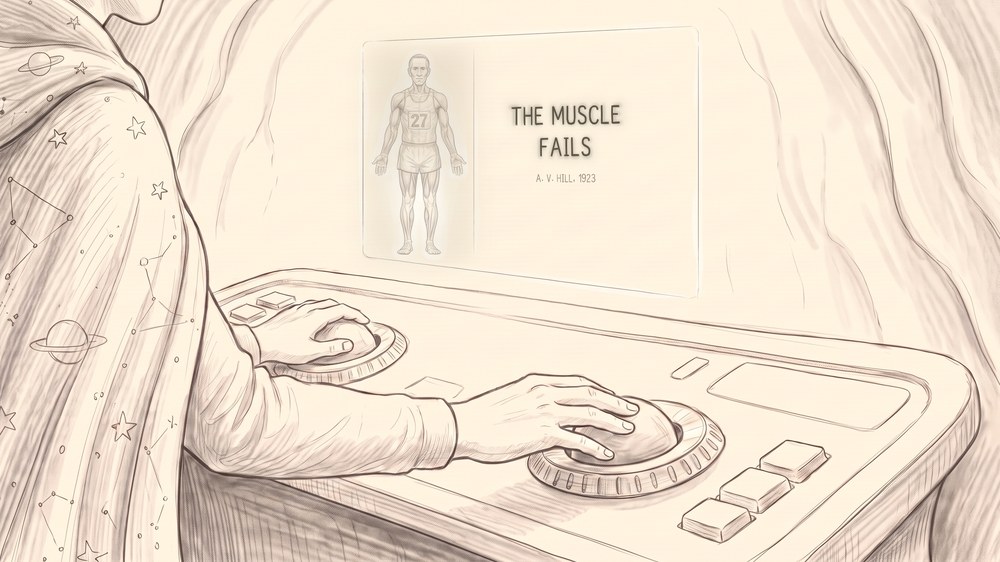
MANAN · THE MUSCLE FAILSA. V. HILL, 1923So the muscle fails.
DOWNLOAD 06 HEAD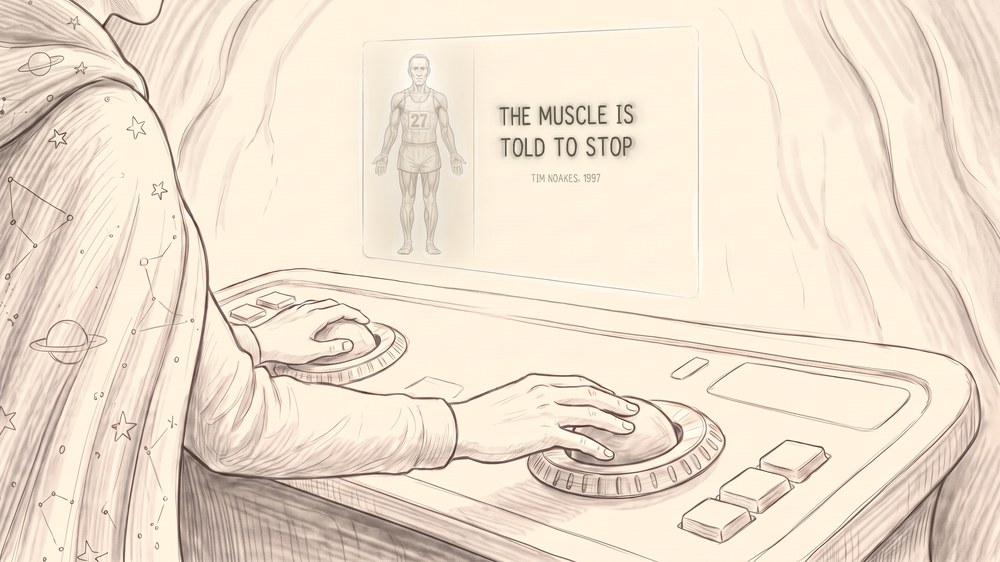
VIVEKA · THE MUSCLE IS TOLD TO STOPTIM NOAKES, 1997The muscle is TOLD to stop. It is still able. It is being held back.
DOWNLOAD 07 LEG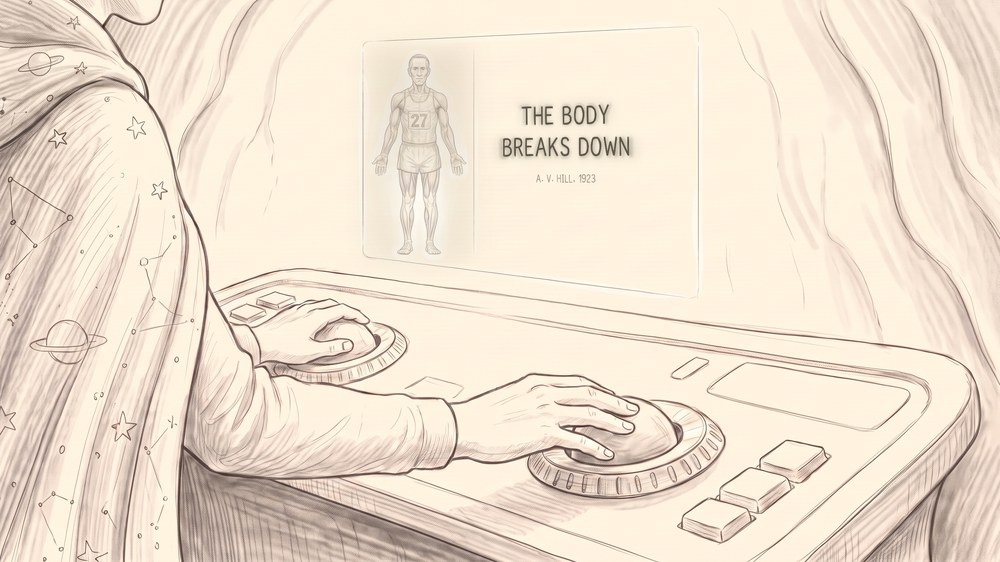
MANAN · THE BODY BREAKS DOWNA. V. HILL, 1923But Hill said the body breaks down. A catastrophe.
DOWNLOAD 08 HEAD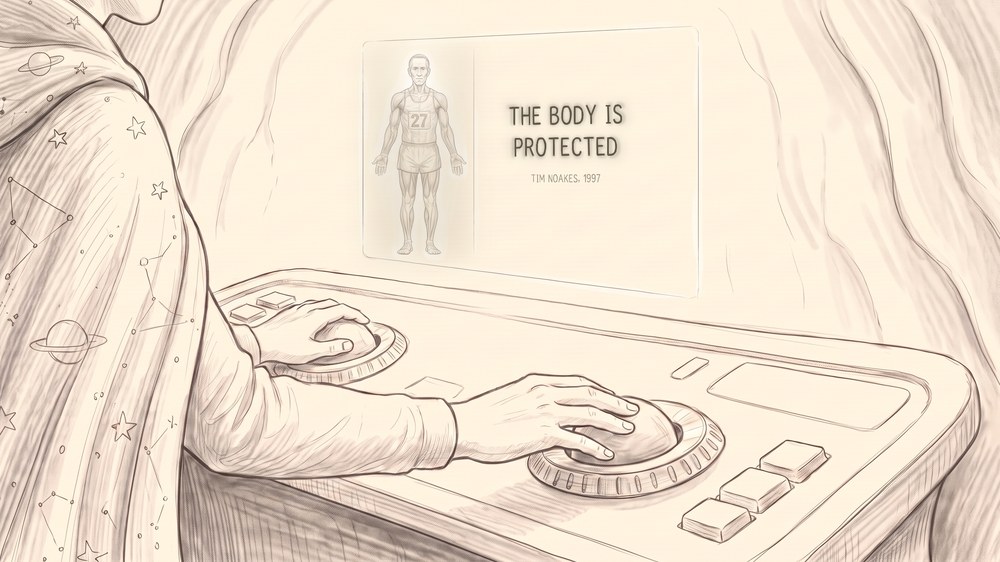
VIVEKA · THE BODY IS PROTECTEDTIM NOAKES, 1997Nothing breaks. You are being protected, and you feel that protection as tiredness.
DOWNLOAD 09 HEAD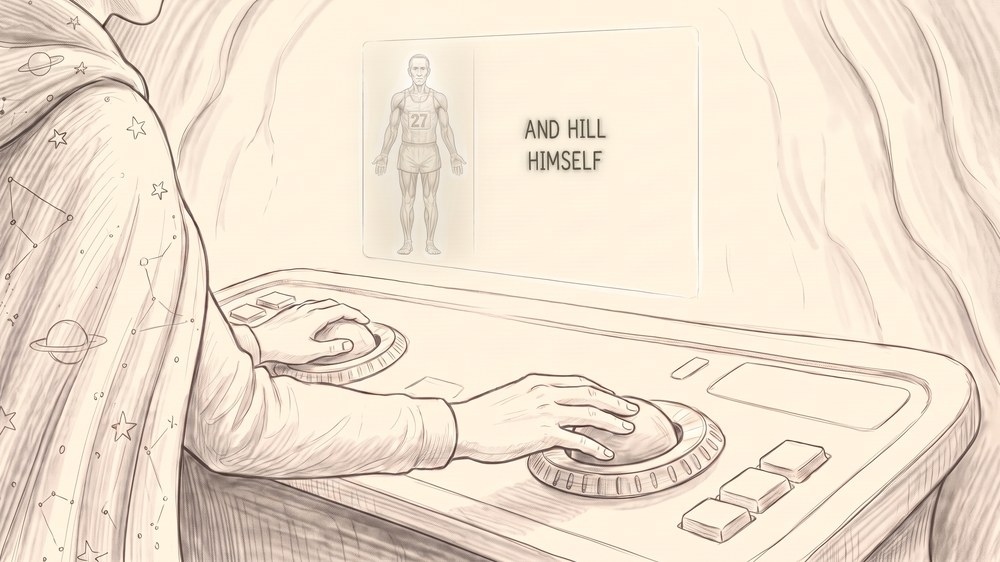
MANAN · AND HILL HIMSELFAnd Hill himself? Did he never think of this?
DOWNLOAD 10 HEAD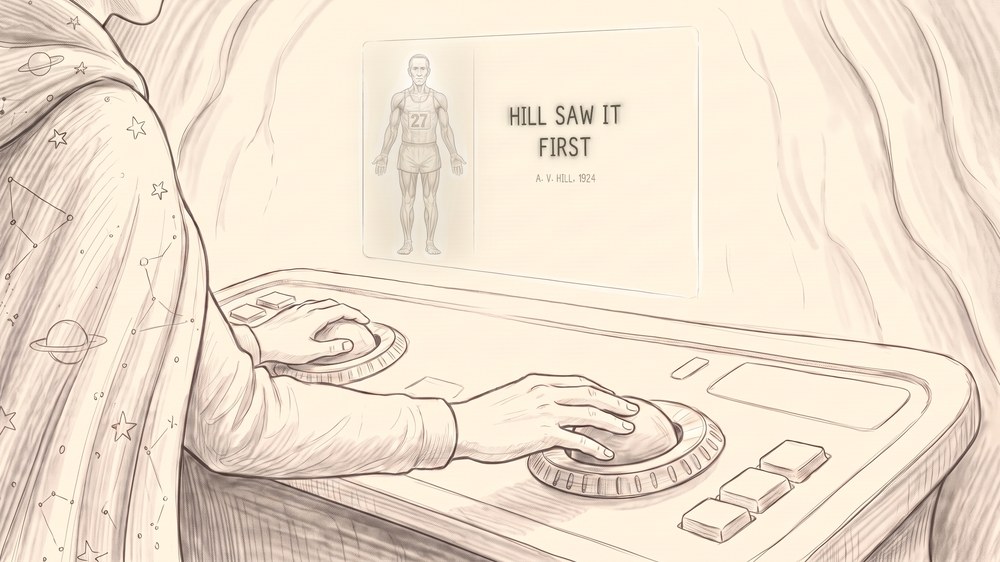
VIVEKA · HILL SAW IT FIRSTA. V. HILL, 1924He did. One year later, in 1924, he wrote that something central must be governing the heart, protecting it.
DOWNLOAD 11 HEAD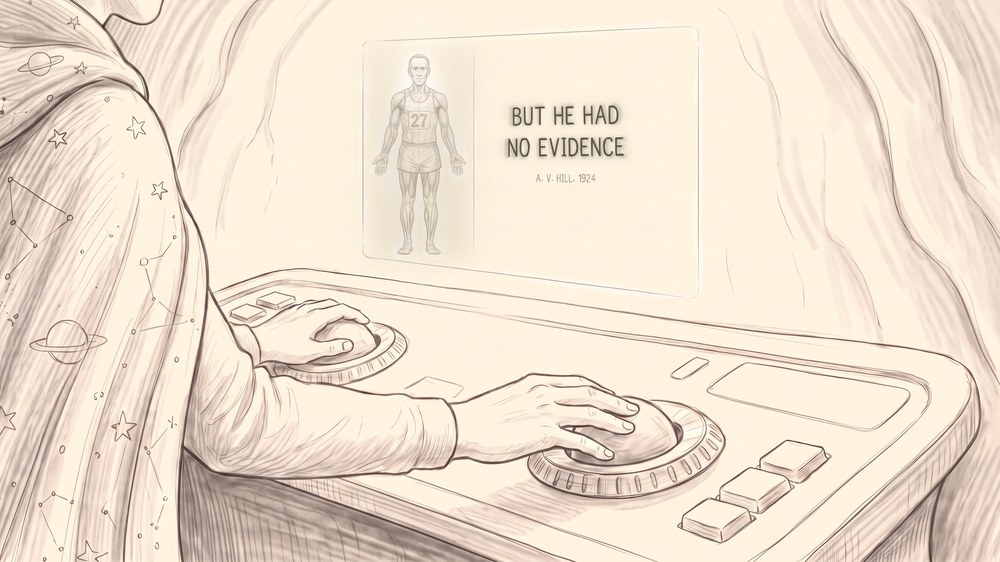
VIVEKA · BUT HE HAD NO EVIDENCEA. V. HILL, 1924But he had only reasoning, no evidence. So it was dismissed, and for seventy years everybody studied the muscle.
DOWNLOAD 12 HEAD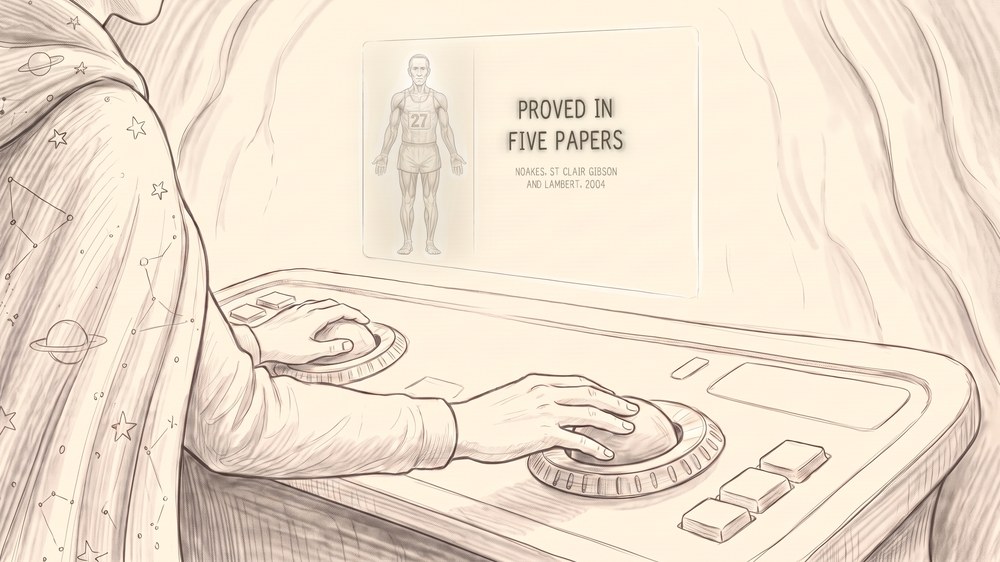
VIVEKA · PROVED IN FIVE PAPERSNOAKES, ST CLAIR GIBSON AND LAMBERT, 2004Then Noakes, St Clair Gibson and Lambert published it properly, five linked papers, in 2004.
DOWNLOAD 13 HEAD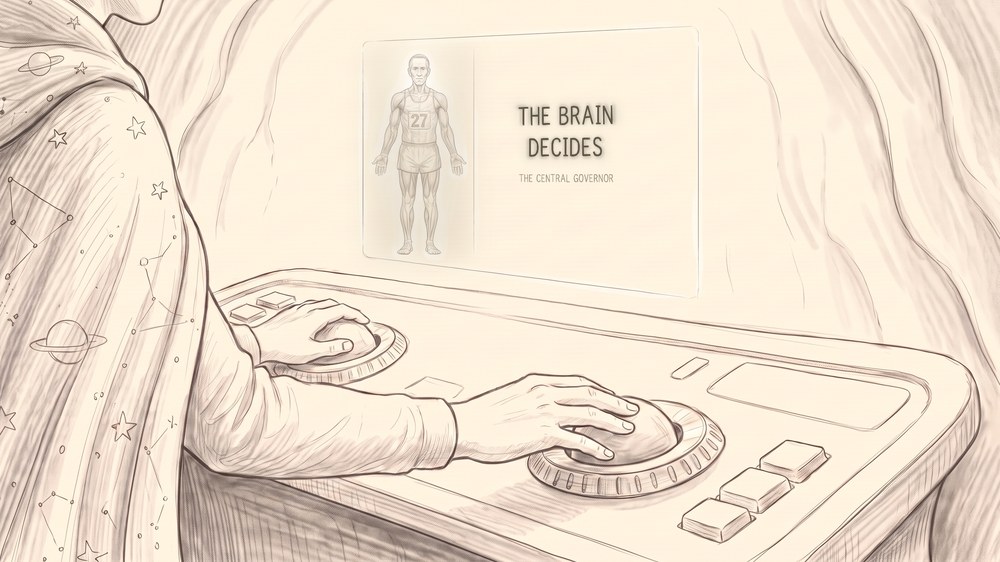
VIVEKA · THE BRAIN DECIDESTHE CENTRAL GOVERNORThe brain reads your pulse, your breath, your temperature, your water, your sugar. The whole time. And it decides when you stop.
DOWNLOAD FULL RESOLUTION 5.8 MB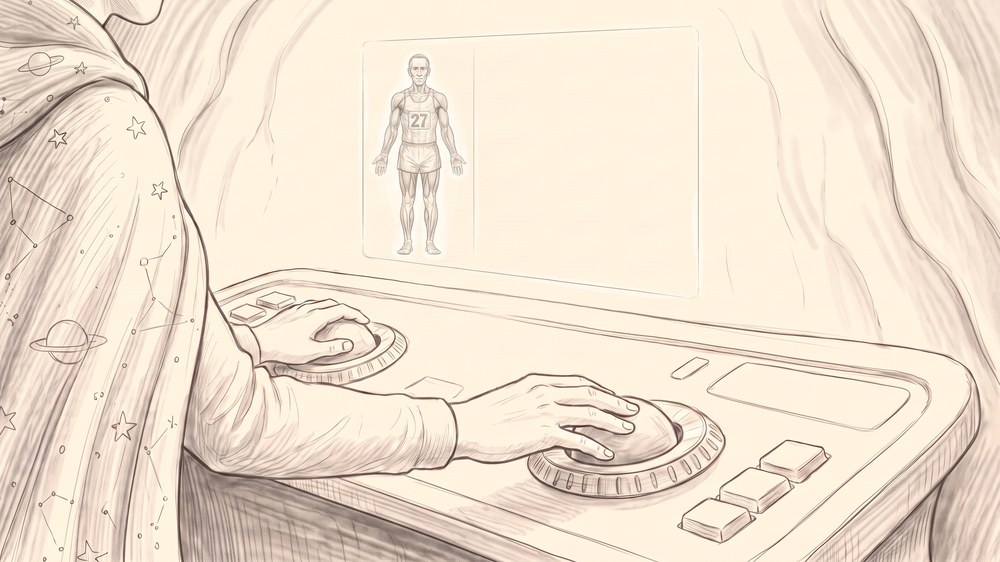
The empty boardThe plate with no words and no highlight. Every other frame is this one with text and light composited on, so they cut without a flicker.
← SC6-2 · all frames · SC6-5 →