THE BRAIN BRAKE
The book the film was made from
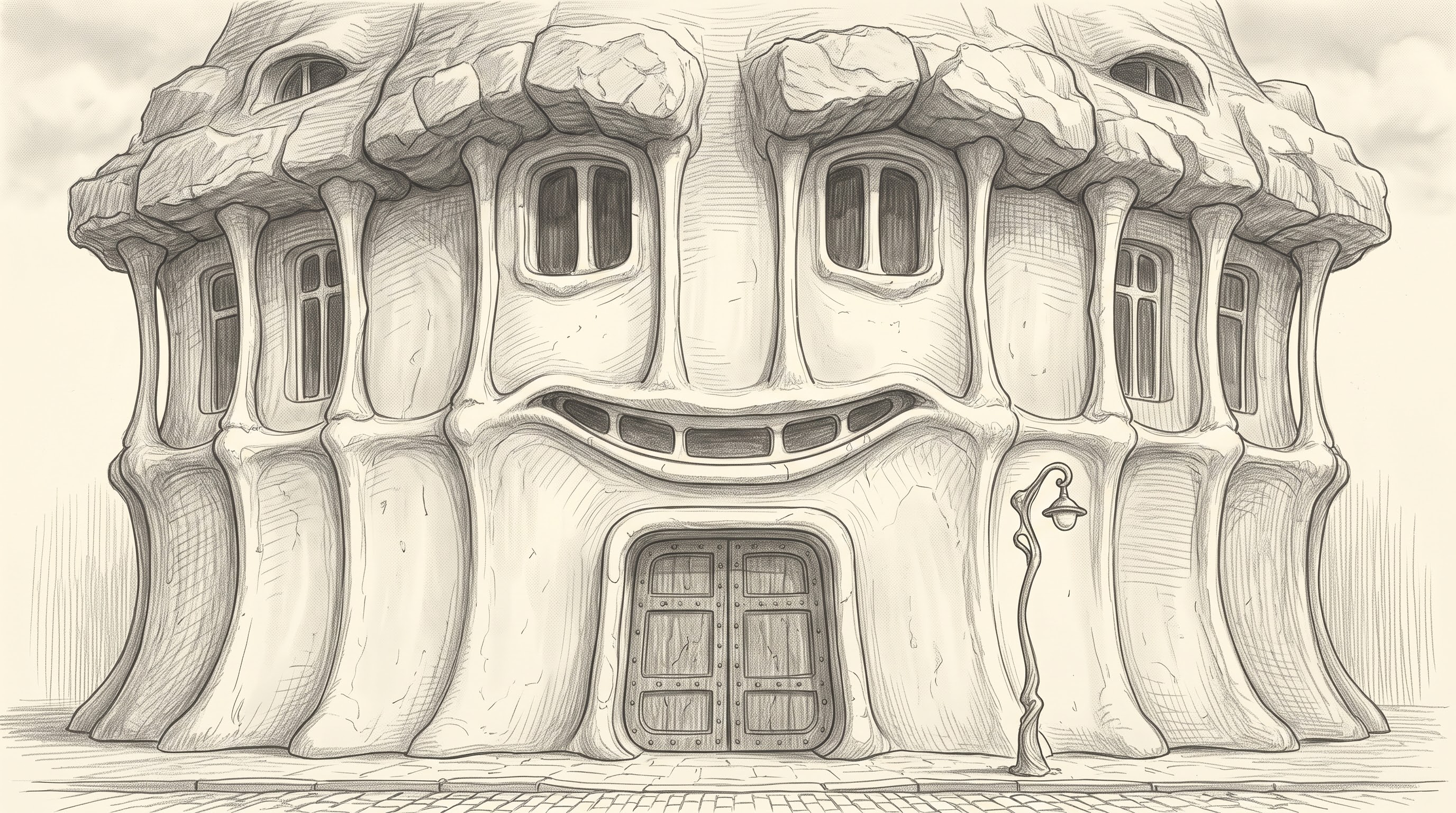
The book the film was made from
PART ONE — THE ROAD
Chapter One — The Mystery
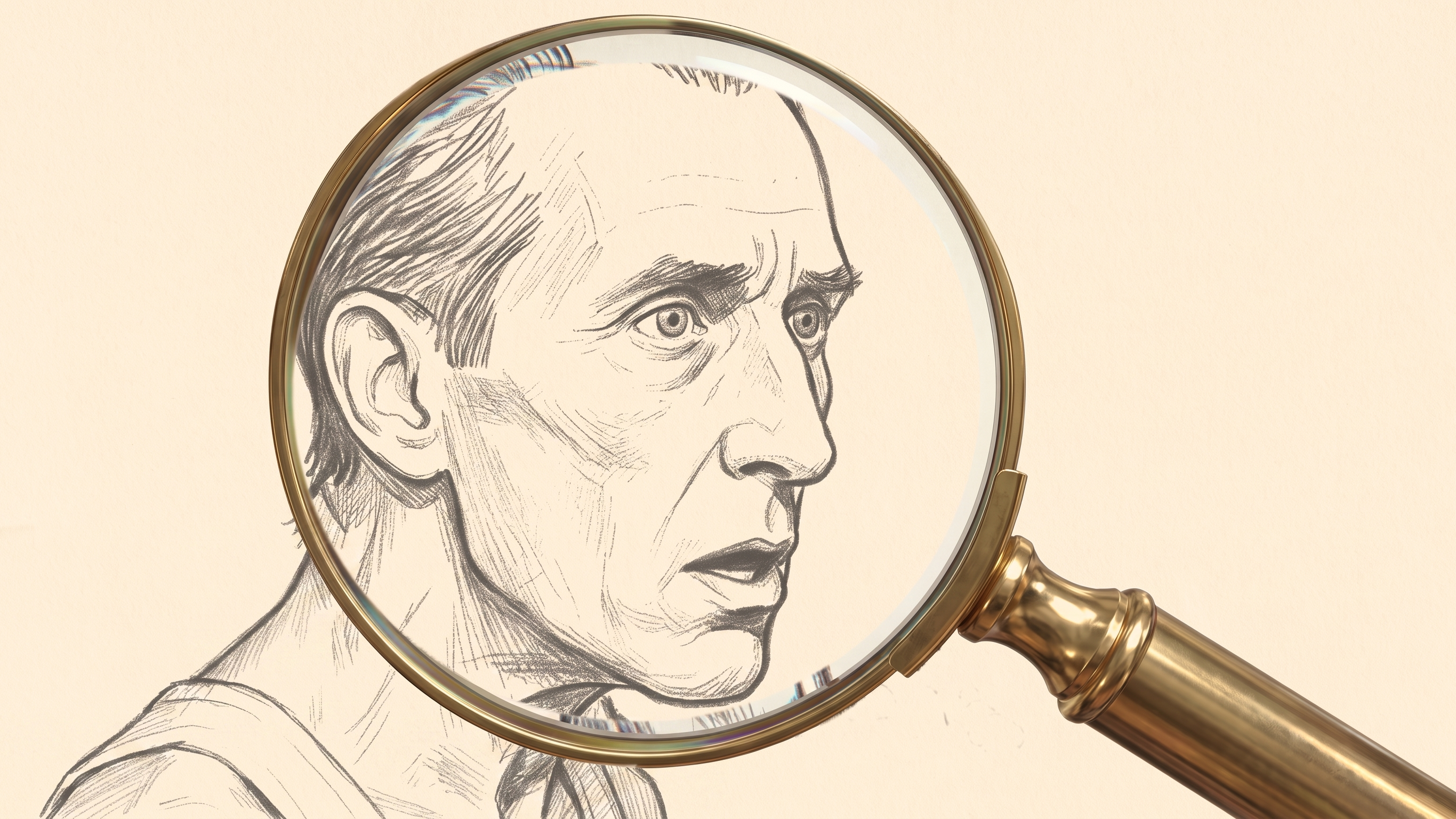
Everybody has felt it and almost nobody has questioned it.
You are running, or swimming, or carrying something heavy up a stair, and there comes a point where the body says no. Not a polite no. A total one. The legs go soft, the chest burns, a voice with no words in it announces that this is the end of what is available, and you stop, and you believe it completely, because it did not feel like an opinion. It felt like a fact about the world.
And then, sometimes, something happens. A dog appears. A bus is leaving. Somebody you love shouts your name from further up the hill. And the body that had nothing left produces a hundred metres out of nowhere, at a speed it had refused to give you thirty seconds earlier.
Where was that?
That is the whole question. Manan was fourteen and he had noticed it, which is rarer than it sounds, because most people feel it their entire lives and file it under trying harder.
Chapter Two — The Old Theory
For most of the last century the answer was simple, and it was about fuel.
The picture went like this. A muscle is an engine. It burns what it is given. When the fuel runs out, or when the waste products of burning it build up past some threshold, the engine seizes, and that is exhaustion. It is a failure at the edges, out in the arms and legs, and the brain is only the unlucky office that receives the news.
It is a good theory. It is clean, it is mechanical, and you can draw it on a blackboard in one minute, which is part of why it lasted.
It also does not survive the dog.
If the tank were truly empty there would be no hundred metres. There would be nothing. An engine out of petrol does not find a reserve because something frightened it.
Chapter Three — The Full Tank
The measurements say the same thing, less dramatically.
Take somebody to the point of collapse, the real point, the one where they stop and mean it, and then look inside the muscle. There is fuel left. Not a trace. Meaningful amounts. Whole fibres that were never called upon at all, sitting there, unused, in a body that has just announced it can do no more.
The tank is not empty. It has never once been empty. It is not allowed to be empty.
That last sentence is the film.
Chapter Four — The Gatekeeper
In the nineteen nineties a South African physician named Tim Noakes put a name to the thing that had been quietly doing this, and called it the central governor.
The idea is this. Somewhere upstream of the burning and the shaking, the brain is running a calculation it never tells you about. It knows the distance. It knows the heat. It knows how much is left and how fast the temperature is climbing and how this went the last time. And long before anything is actually in danger, it begins withdrawing permission. Fewer fibres are recruited. The effort feels larger for the same speed. The voice with no words says stop.
It is not lying and it is not weak. It is a safety margin, and it is generous because it is protecting you from the one mistake a body cannot recover from.
But a margin is a decision. And a decision can be revised.
Chapter Five — The Experiment
Manan did what you do when you are fourteen and cannot yet read the papers.
He tested it on himself.
He rode the bicycle until the voice arrived, and then he counted, and the voice arrived at almost the same count every time, which was interesting, because his legs were not the same on Tuesday as they had been on Sunday and the number was.
He raced himself down the corridor at home, which is not a scientific instrument, and found that he was faster when somebody was watching, and faster still when he had decided beforehand where the finish was.
He held his breath in the bath. That one taught him the most. The urge to breathe does not arrive when the oxygen runs out. It arrives long before, and it can be argued with, and the arguing does not kill you.
Every experiment said the same thing in a different voice. The wall moves.
Chapter Six — The Release
And then, on the last afternoon, he ran past it.
Not far past. A few strides. But he went through the place where the voice lived and came out the other side, and the other side was not collapse. It was the strangest calm he had ever felt, a kind of quiet in the middle of the effort, as though a hand had been taken off his chest.
He remembers thinking, with great clarity and no fear at all, that he was about to find out something.
Then the ground was a long way away, and the light went sideways, and the world did the strange courteous thing it does when you refuse it.
It folded.
Chapter Seven — What Happens Next Is Not A Dream
It would be easy to say he dreamed the rest, and the film does not say that, and neither does this book.
What happens to a mind at that edge is not sleep and it is not story. It is closer to what happens when you finally understand a piece of music you have heard all your life: nothing new arrives, and everything rearranges. The material was already there. The order changed.
So when he went inside, he went inside something he had been living in since the day he was born and had never once looked at.
Chapter Eight — The Invitation
There is one more thing to say before the passage opens, and it is the reason any of this matters to anyone who will never run a race.
The central governor is not only about running.
Every limit you have met that felt like a wall, and there have been many, was being held in place by something. Some of them are real walls. Most of them are settings, put there in good faith, by a system that was protecting you with the best information it had at the time, and never updated.
The film is two minutes long and it cannot say that out loud without becoming a lecture. So it does what stories do instead. It sends a boy down a hole.
PART TWO — THE HOUSE OF THE BODY
Chapter Nine — The Passage
There is a moment, when a body has been asked for everything it has, that the asking stops.
Manan had been running. Not the running of a race, which has an end and a ribbon and someone to beat, but the running of a boy who wanted to know something and had no other way to ask. He had put the question to his legs on a bicycle, and to his lungs on a hill, and to the whole of himself on the long road past the water tank, and every time the answer had come back the same, in the same flat voice, at the same place: no further, not today, that is enough.
He had never believed it. That was his difficulty and it would turn out to be his gift. He could feel, somewhere under the burning, that there was more left. Not much. But some. And the more was being held back by something that was not his legs.
So on the last afternoon he ran until the voice said no, and then he kept going, and the world did the strange courteous thing it does when you refuse it. It folded.
He closed his eyes. The dark did not come.
What came instead was a turning.
Around him, or perhaps through him, a throat had opened in the air, pale as paper and wide as a room, and it went up. It did not run straight back like a corridor. It narrowed the way water narrows when it leaves a basin, curving in on itself, drawing its own walls toward its own centre, except that the narrow end of it was somewhere above and everything in it was climbing.
And the water it was made of was made of keys.
Not lying in the water. Being the water. Every strand of that rising current was a line of small keys laid end to end, tip to head, tip to head, strung out loosely with gaps between them so that each strand was more air than key, and there were not many strands. The whole vortex was sketched rather than built, a few long curving lines climbing and turning around a mostly empty middle. All of them the same key: a long round shaft, a flat disc at the head with three lobes cut clean through it and a small number five stamped near the edge, three raised rings at the collar, three square teeth at the bit. Near him one or two were exact enough to read. Further off they were only marks.
Not one of them was gold.
This is worth saying slowly, because it is the whole of what happened to him. He was being carried up through a river made of the very thing he was looking for, and it was grey. Grey as the pencil the world was drawn in. He passed within a hand's width of ten thousand keys and did not see a single one, because he did not yet know that a key was what he needed. The thing you are looking for is invisible until you know you are looking for it. Everyone learns this eventually. He learned it at speed, going up.
And then it took him, and it did not take him down.
He went up. That was the part he had not expected and the part he could never afterwards explain to anybody. A whirlpool is supposed to pull you under. This one lifted. It closed around him and drew him upward the way water is drawn up a stem, and his feet left whatever he had been standing on, and everything he was wearing pulled downward while he went the other way.
The turning rolled him onto his side as it carried him, arms out, and for a moment he was looking back down the way he had come, at the wide bright mouth of it far below, with the ordinary afternoon still visible through it and already too far. Then the current turned him again and he rose past us with his face open, and the keys streamed by underneath him like rain falling upward.
He did not rise for long. It only felt long, the way it does.
Chapter Ten — The House
He arrived standing, which is its own small mercy.
The house was white, and it was breathing.
Not obviously. Not so that you could point at it. But the walls had the soft swelling of clay pressed by hands rather than cut by tools, and they rose and settled, rose and settled, so slowly that you would have to stand still for a minute to be sure. Everything was the colour of old paper. There was no sky. There was no outside at all, once the door had closed behind him, and he had not seen it close.
He understood, in the way you understand things in that state, without being told and without surprise, that he was inside himself.
Not inside his body the way a surgeon would mean it. There were no wet things here, nothing red, nothing that would frighten a child. It was a house. It had corridors and vaults and doors and a floor worn smooth down the middle by long use, and the long use was his own, and he had been walking on it since the day he was born without ever once looking down.
And he had come here to find something.
He did not know what. He only knew the shape of the not knowing, which is the same shape as a key, though he could not have told you that either.
Chapter Eleven — The Doors
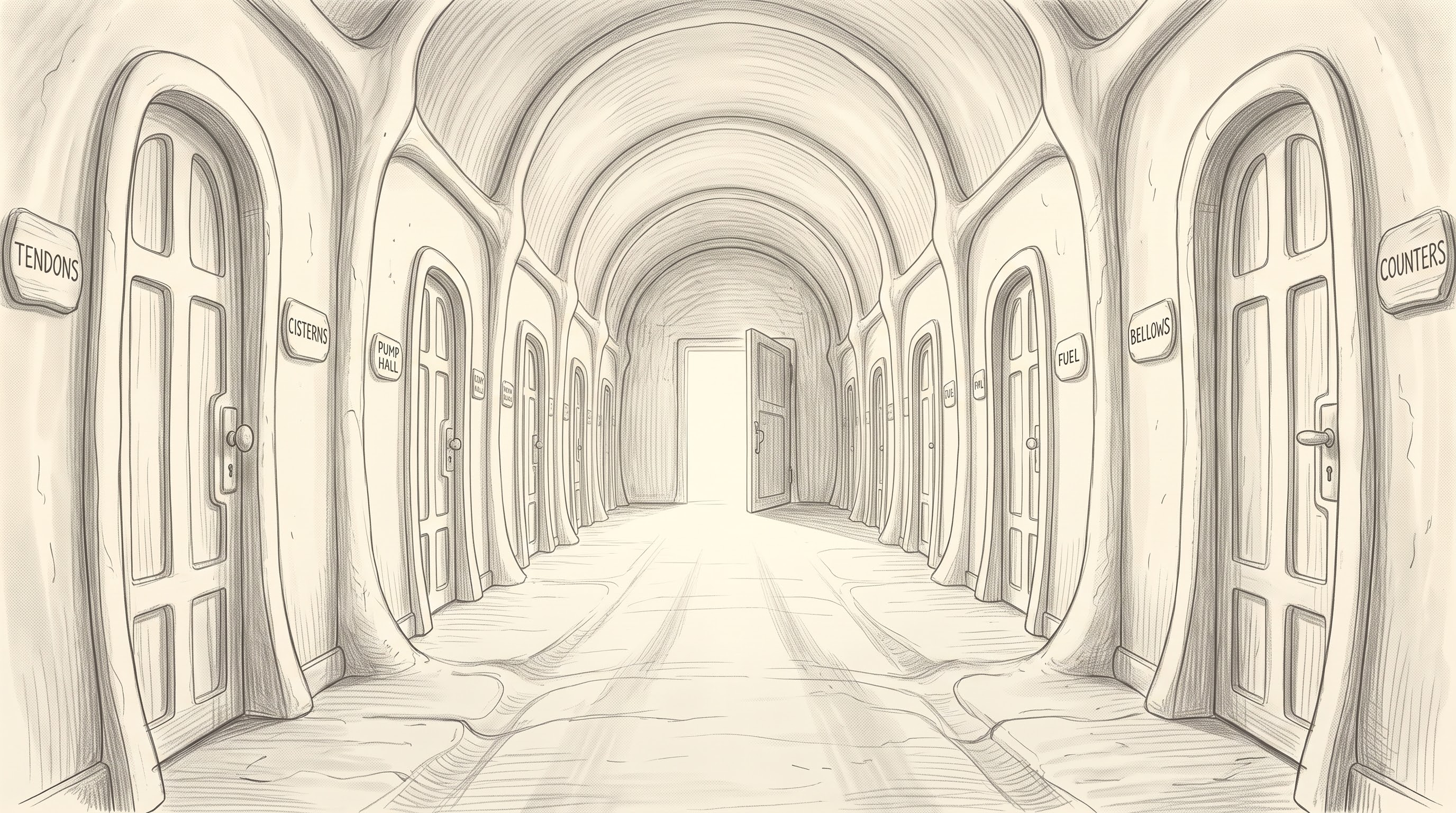
The corridor was full of doors, and every door had a swelling in it.
Not a sign. Not a word. Nobody in this house had ever needed to read. The clay itself rose into the shape of what waited behind it, the way a tree is moulded into the wall of an old house by the hands that built it, so that you run your palm over it in the dark and know.
The first door carried a bundle of fibres, a muscle drawn as a rope of gathered strands, and it stood a little open, because he had already tried it.
Inside was a long hall of tendon and cord, pale and warm and quiet. Ropes ran the length of it and disappeared into the walls at both ends. This was the part of him that had been shouting all afternoon, and now that he was standing in it, it had nothing to say. It was simply here, and it was fine, and it had been fine the whole time. Nothing was torn. Nothing was finished. There was no key.
At the far end of that hall, small and unhurried, another door waited, and on it a pair of lungs.
The bellows hall was the largest room in the house. Great pale bulbs hung from the vaulting and swelled and emptied without a sound, and the air moved past his face in long slow tides, and he stood in the middle of it and breathed with it because there was nothing else to do. This was the part that had burned. It was not burning. It had never actually been in danger. There was no key here either.
At the end of the bellows hall, a heart.
The heart hall was chambered and dim and it thudded, and the thud was the sound he had been hearing in his own ears for the last mile of the road. Standing inside it, it was not urgent at all. It was patient. It was the most patient thing he had ever been near. It had been doing this since before he existed and it intended to continue long after this afternoon was forgotten.
And there was no key in it.
He had now been through the three parts of himself that had told him to stop, and not one of them had been the thing that stopped him.
That is the discovery. Everything after it is only arriving.
At the end of the heart hall, at the vanishing point, where the corridor closed to a single small shape, there was a door with something on it that he had not seen anywhere in this house.
Chapter Twelve — The Key Door
It was a key.
Not a plaque, not a name, not a word. A key raised in the clay, running the whole height of the door from the floor to the top of the arch, the same white as the wall it swelled out of, so that it was not decoration and not a label but simply the door telling the truth about itself in the only language this house had.
By now he could read it. So can you. Nobody explained the bumps and nobody needed to, and that is why this door works and a written sign would not have.
He put his hand on it.
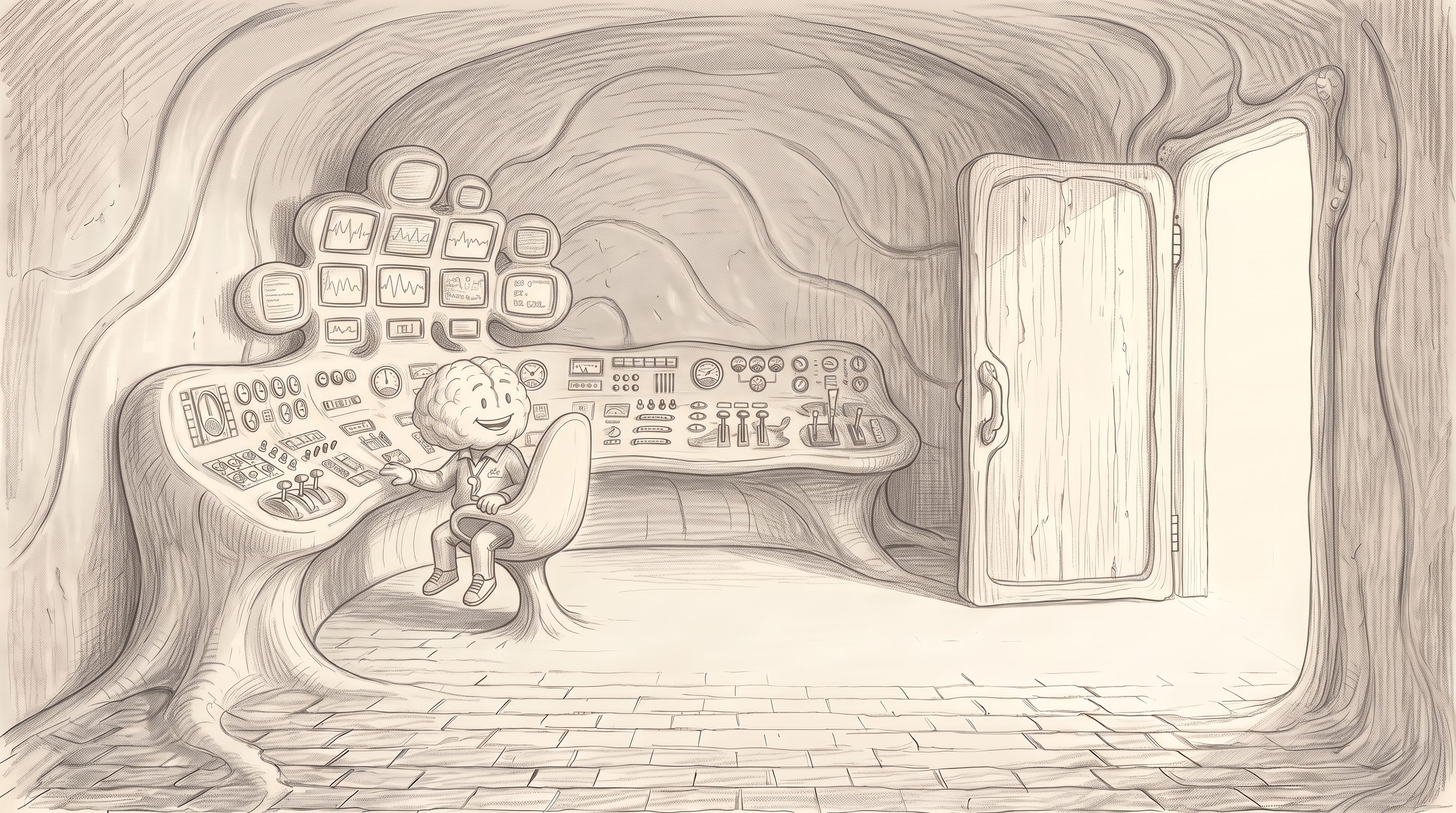
And behind it, in a small round room, at a curved desk of pale clay covered in dials and switches and little grey screens, in a chair much too big for him, sat a brain.
He was quite small. He had a cheerful, tired, competent face, the face of somebody who has been on shift a very long time and has stopped expecting visitors. He turned round when the door opened, and he did not look startled, and he did not look guilty, which was somehow worse, because it meant he had been doing his job.
And on a cord around his neck, catching a light that came from nowhere in that room, hung the only gold thing in the world.
THE LAST PAGE
There is one more thing, and it belongs at the end because it was at the end.
Long before the running, before the bicycle and the hill and the long road past the water tank, before anyone had thought of a house made of clay or a key with three teeth, there was a habit older than any of it. A plate of food is not eaten first and offered afterwards. It is offered, and then it is eaten. The giving comes before the having. Nobody who does this can quite explain what it is for, and everybody who does it knows.
So this film was made and then given away.
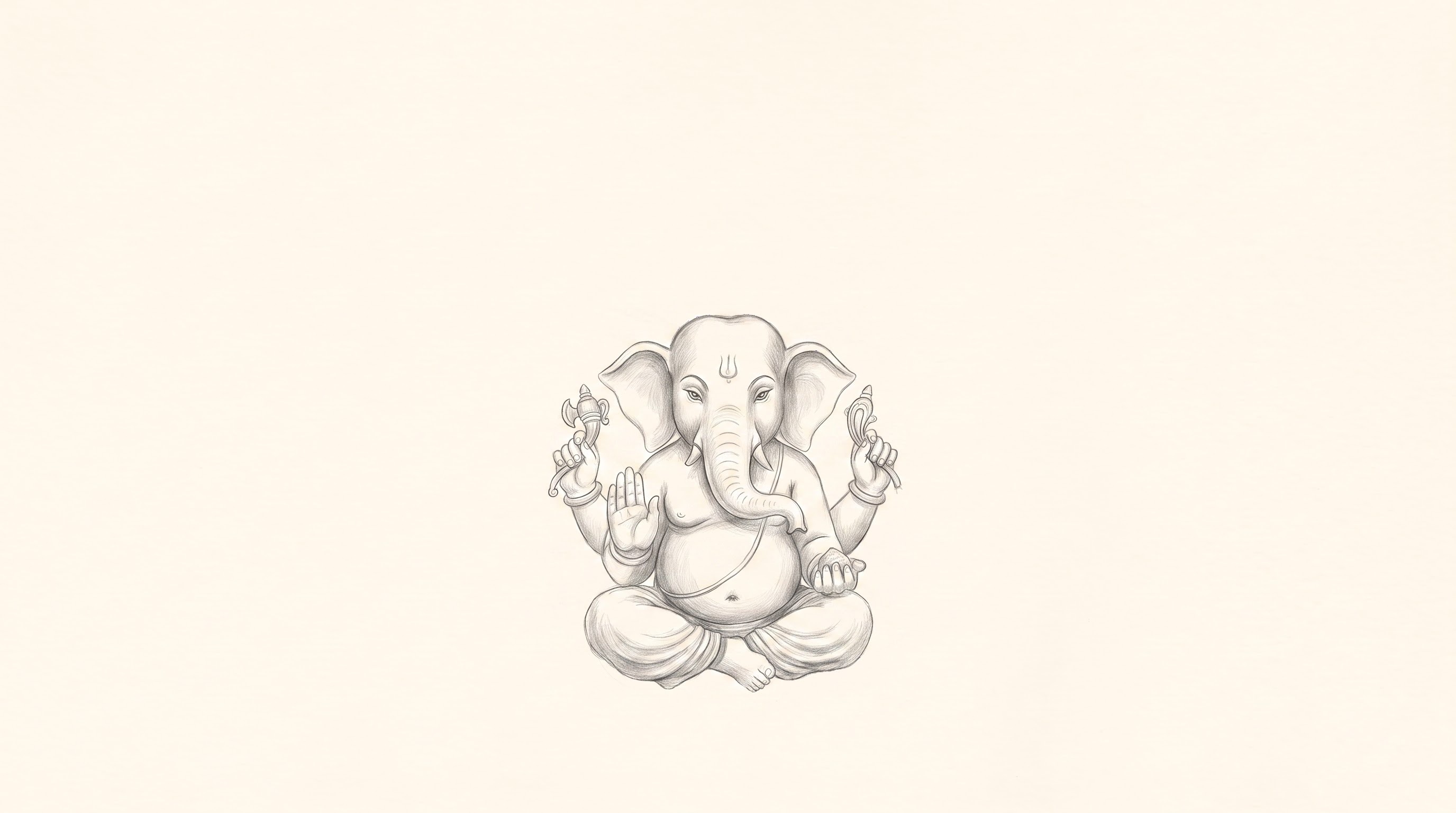
It is dedicated to Ganesha, who removes obstacles, and it is worth saying why that is the right hands to put it in and not merely a pleasant one. The whole of what happens here is a boy discovering that the thing standing across his road was never a wall. It was a setting. Someone had put it there, carefully, in good faith, to keep him safe, and it could be moved. A film about an obstacle that turns out to be removable has only one place to go when it is finished.
None of this is mentioned earlier. Not once. There is no hint in the first frame and no echo in the last shot, and if you watch the whole thing twice you will find nothing that was pointing at it.
That is deliberate, and it is the difference between a theme and a gift. A theme is prepared for. A gift arrives.
So it comes at the very end, after every name, when the film has stopped being something to look at: a single card, an elephant headed figure forming out of the paper the way everything in this story forms out of paper, and a line under him saying who this was for.
Then the music, and then nothing.
Written by Marko Boško for THE BRAIN BRAKE, a two minute film for the Breakthrough Junior Challenge 2026, presented by Manan Periwal, animated by Kristijan Kaurić, produced by Neha Sonthalia Periwal, photographed by Aurovenkatesh.
The film had to say this in two minutes. The book did not.
Dedicated to Ganesha, remover of obstacles.