ASSETS
Put the script, the guide and brain_break_key.obj in one folder, open Blender, Scripting tab, Run. You get 432 keys laid along the spiral as linked instances of the one key mesh, the funnel as a wireframe guide that is hidden in render, and VORTEX_CAM already animated, 100 frames at 25 fps, flying from outside the mouth into the throat and rolling with the spiral. Animate the camera, not the keys.
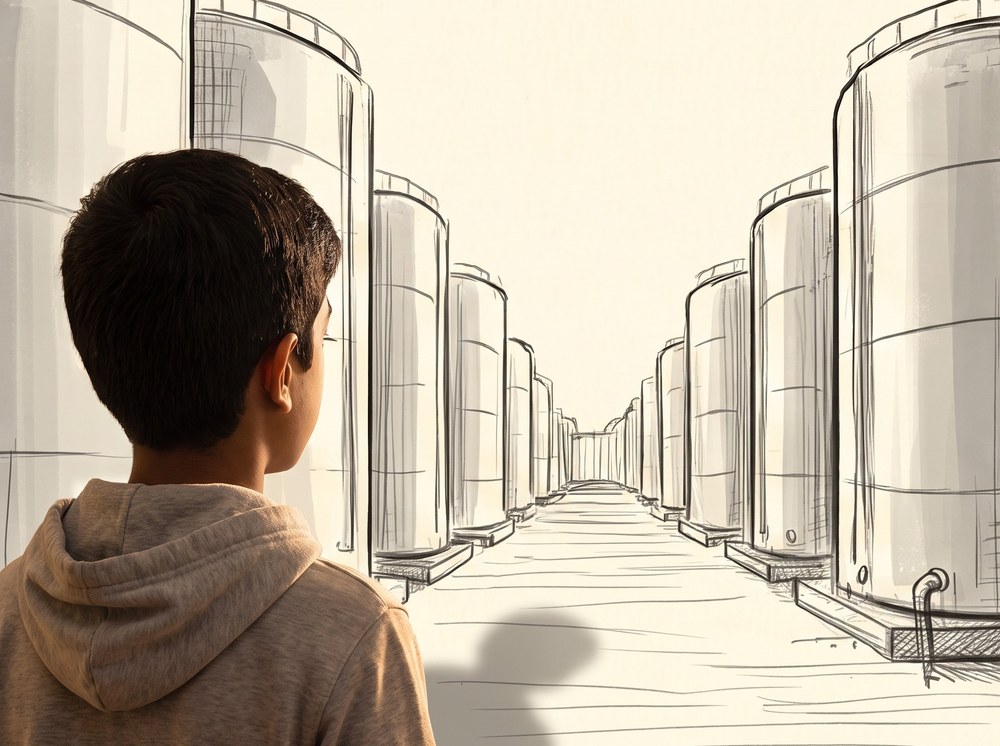
The shape is Viktor Schauberger’s implosion vortex and two facts do all the work. The section is a rectangular hyperbola, not a cone, so the wall curves inward as it descends; Schauberger held the right form for a vortex chamber was the egg, which is a section through the hyperboloid of rotation. And the plan is Kepler’s harmonic spiral, so successive turns come in to 1, 1/2, 1/3, 1/4 of the mouth radius and the turns tighten toward the centre. That is what pulls the eye in rather than leading it along. Mouth 7 m, throat 0.70 m, 26 m deep, ten turns. The keys scale with the local radius, so coverage rises from 1.2 keys deep at the mouth to 3.1 at the throat and the wall closes up on its own. Nothing is placed by hand.
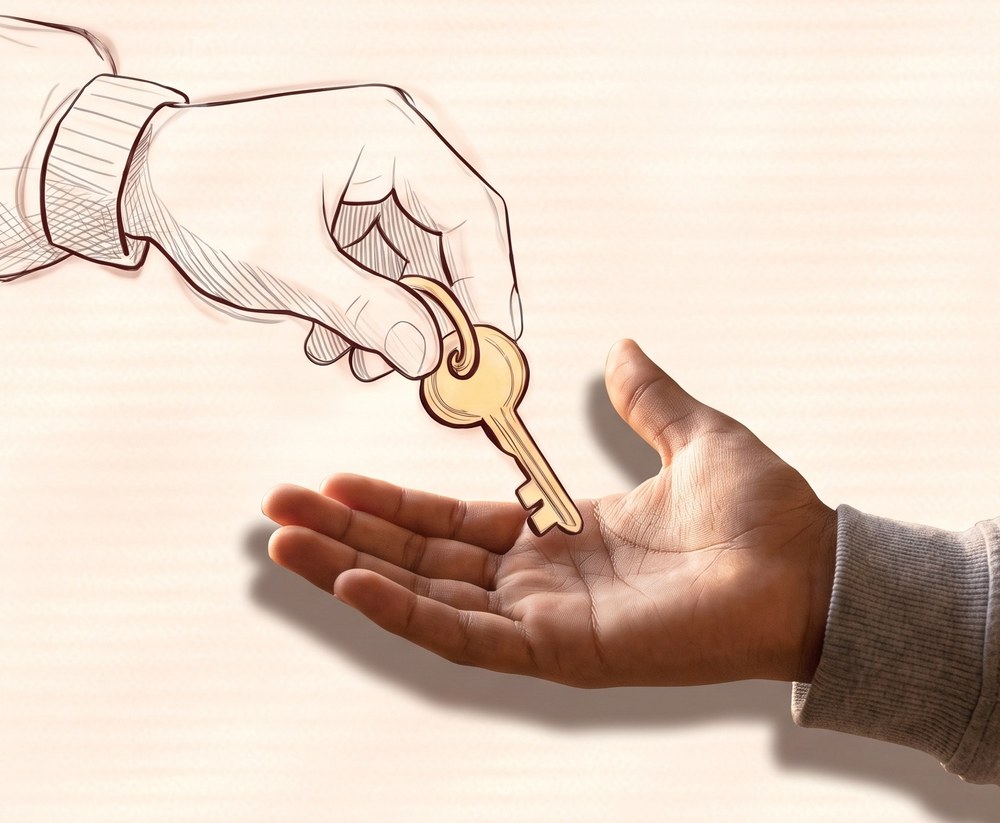
The keys in this shot are pencil and they are not gold. Gold in this film means found, and Manan has not found the key yet when he goes through the passage. The script assigns a third material, KEY_PENCIL, flat paper white with no specular and a Freestyle outline, and deliberately uses neither the brass slot nor the drawn cream one. The first gold is the key at Coach Brain’s neck and the last is the key falling.
Four numbers at the top of the script control everything: MOUTH_R, TURNS, DEPTH, KEYS_PER_TURN. Reach for KEYS_PER_TURN first: raise it until the wall reads solid at your camera angle, lower it if the viewport crawls. The source file regenerates the guide with no Blender and no libraries, so the geometry can be checked in any package.
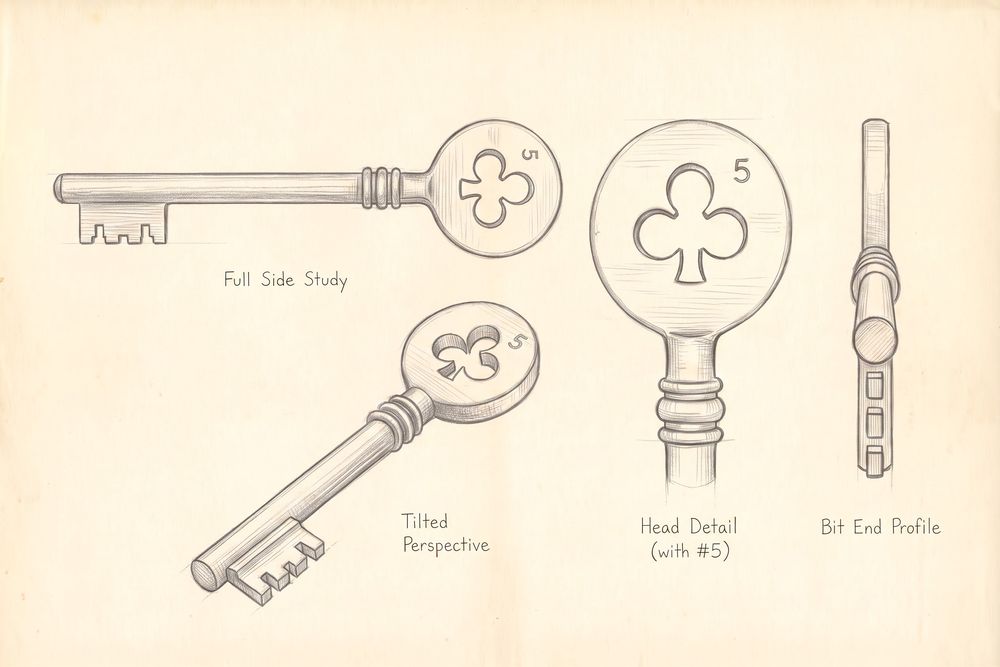
The real key modelled from the photographs: 110 mm long, 26 mm head, clover hole cut clean through, three ring collar, three teeth. Watertight, 694 vertices, exported in metres so it lands at the right scale.
Put both files in one folder, open Blender, Scripting tab, open the script, press Run. You get one mesh with two materials on it: slot 0 KEY_REAL, polished brass, and slot 1 KEY_DRAWN, flat cream with no specular. The mesh never changes, only the surface, so the key crosses from the drawn world to the real one without a vertex moving. Keyframe the material index across the fall.
The origin is at the centre of volume, so it tumbles about itself in a rigid body sim rather than swinging around a corner. The third file is the source that generated the mesh: every dimension is a named constant at the top if you want to change proportions.
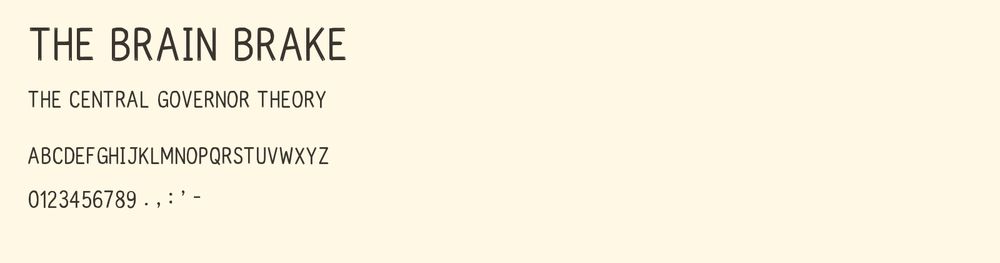
The hand lettering of the film, traced from a specimen sheet and built into a font so a line can be typed instead of drawn. 41 glyphs: A to Z, 0 to 9, and full stop, comma, colon, apostrophe and hyphen. Double click to install on macOS or Windows; it appears as Brain Brake.
No kerning, so tight pairs like AV or TA may want manual tracking. Every letter is identical each time it repeats, which real handwriting is not: for a title that has to look truly hand drawn, draw it rather than set it.
Every image ever made for this film, live and retired. Nothing here is deleted. A frame that was rejected carries the reason it was rejected, which is usually worth more than the frame. Click any of them for the full note and a download. Faded ones are superseded.
In the film 15
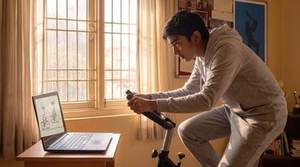

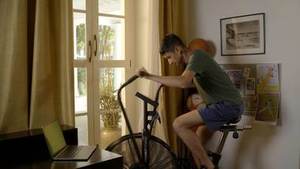
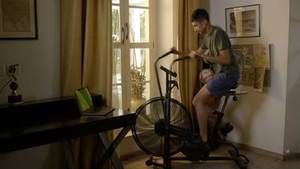

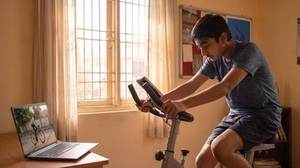
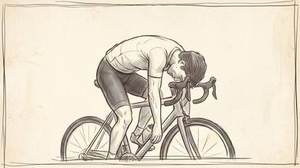
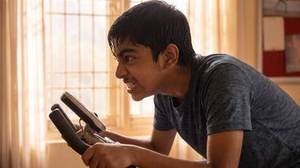
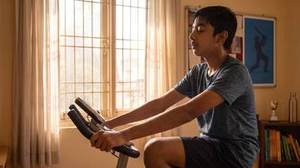
Superseded and rejected 7
Sheets and references 10
THE BRAIN BRAKE
The Central Governor Theory · Breakthrough Junior Challenge 2026